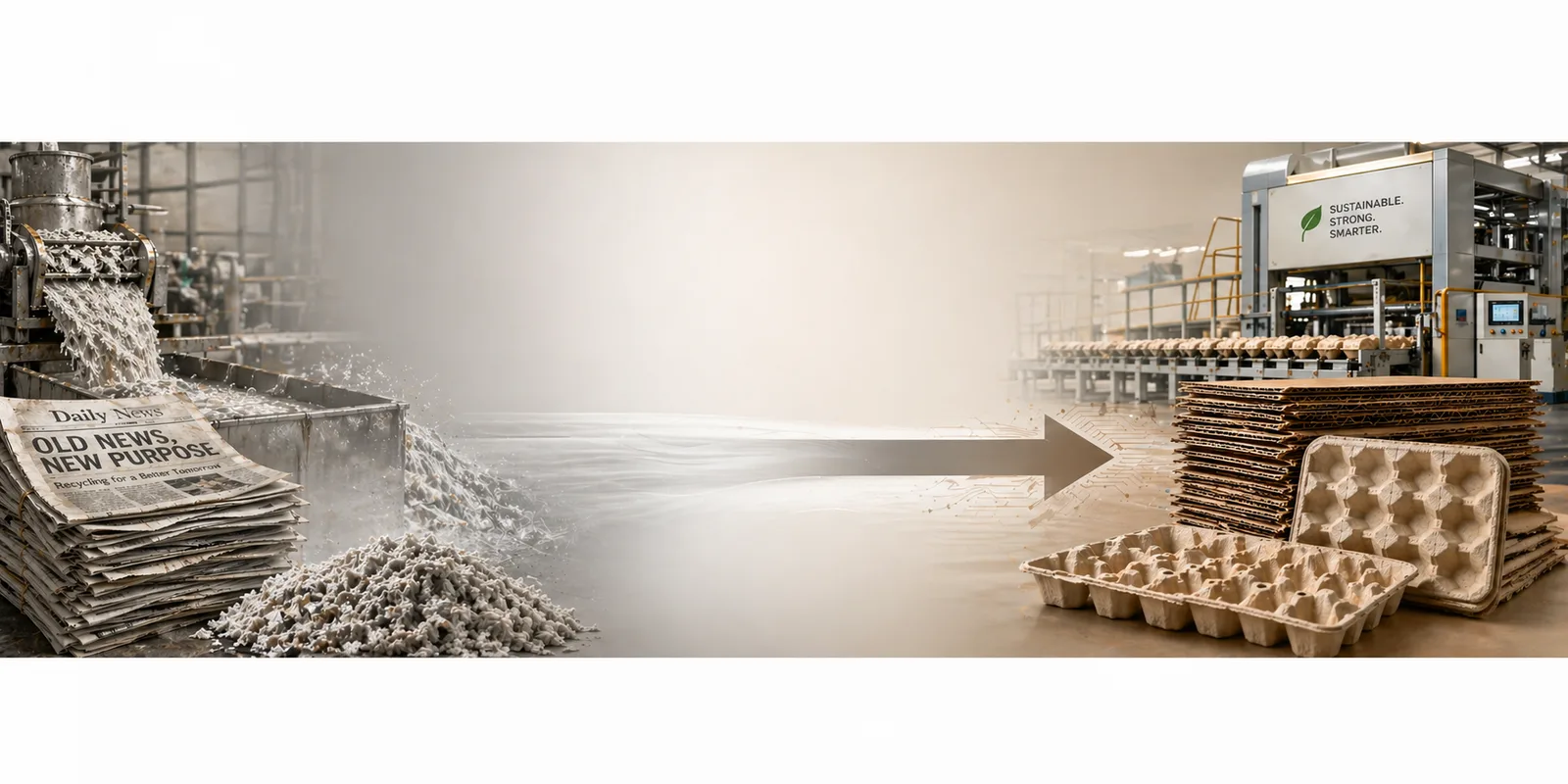
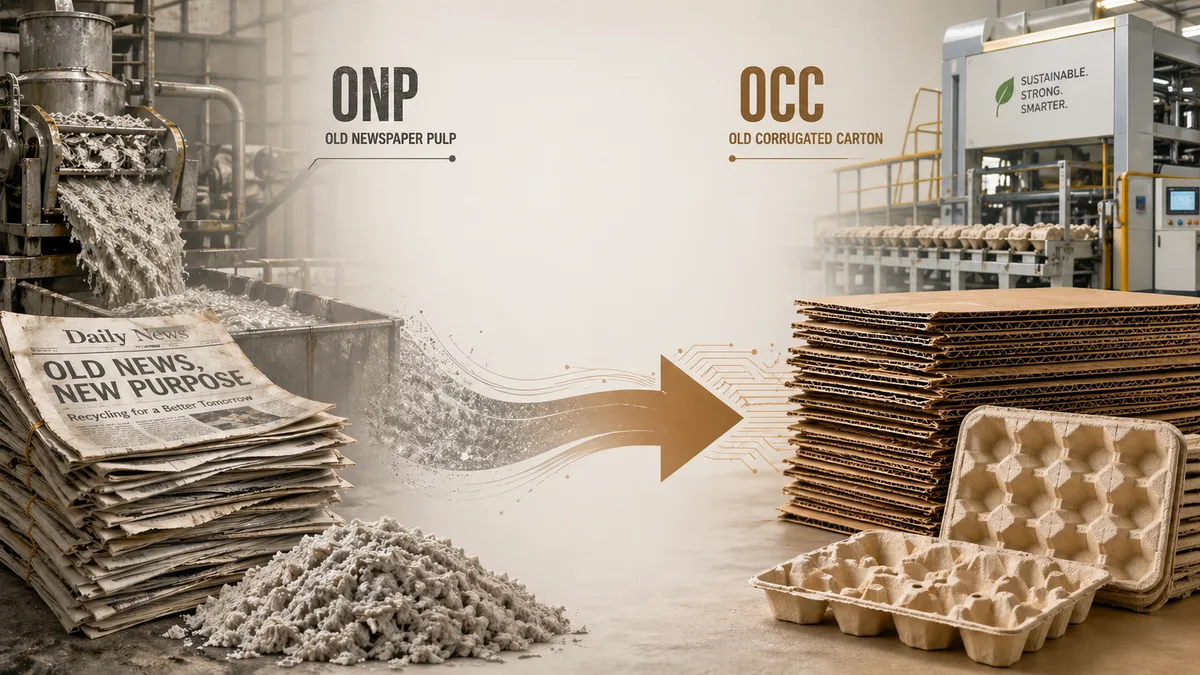
Egg tray molded fiber production has run on Old Newspaper (ONP) for decades — but ONP is disappearing. Print-newspaper consumption is falling structurally, ONP prices have climbed 40–60% in key markets, and supply reliability is deteriorating. The only viable replacement fibre at scale is Old Corrugated Cardboard (OCC), which is abundant thanks to e-commerce growth — but OCC is heavily contaminated, and most ONP-era egg tray lines simply cannot run it well. This guide explains why the ONP-to-OCC transition is inevitable, what changes in stock preparation, and how Parason's high-consistency pulping, ceramic cleaning and three-stage screening system delivers under-2% egg breakage on 100% OCC feed.
Why ONP Is Disappearing
The decline of print media is not a gradual transition — it is structural and irreversible. Digital disruption has made newsprint a shrinking raw material every year, and ONP recovery (the sorting and collection of post-consumer newspapers) has become uneconomical in most markets. What was once a reliable, abundant fibre source for the egg tray industry is now scarce, volatile and expensive.
Prices have increased 40–60% in key markets over recent years, and supply reliability has deteriorated. According to the FAO's forest-products statistics, world newsprint production has fallen sharply since the 2000s while corrugated and packaging-grade paper has risen — a one-way trend.
The egg tray industry, which has historically relied on ONP for premium molded fibre products, cannot absorb these cost increases. Margins in egg packaging are thin, and producers are being forced to explore alternatives. That alternative is OCC.
OCC: Abundant but Heavily Contaminated
Cardboard consumption is rising in nearly every market, driven by e-commerce, logistics and packaging demand. Post-consumer corrugated cardboard is collected, sorted and baled routinely, and on paper, OCC looks like the obvious replacement fibre for egg trays.
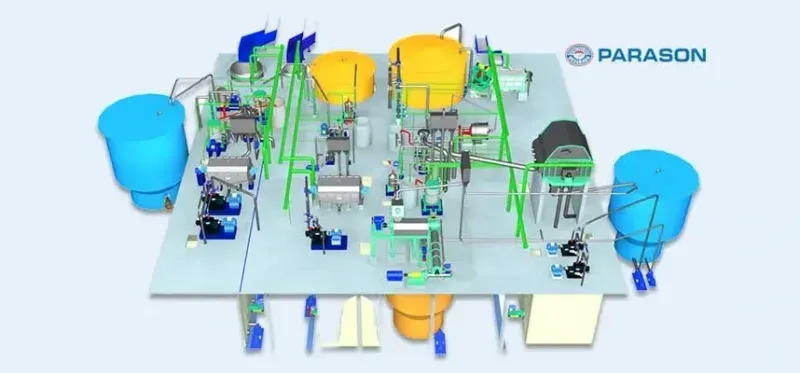
But abundance masks a critical problem: OCC is heavily contaminated. Where ONP arrives at the mill relatively clean — mostly fibre, with limited inks and adhesives — OCC arrives with staples, plastic film, packing tape, hot-melt adhesives, printing inks, and grit picked up in handling. None of that is acceptable in a finished egg tray.
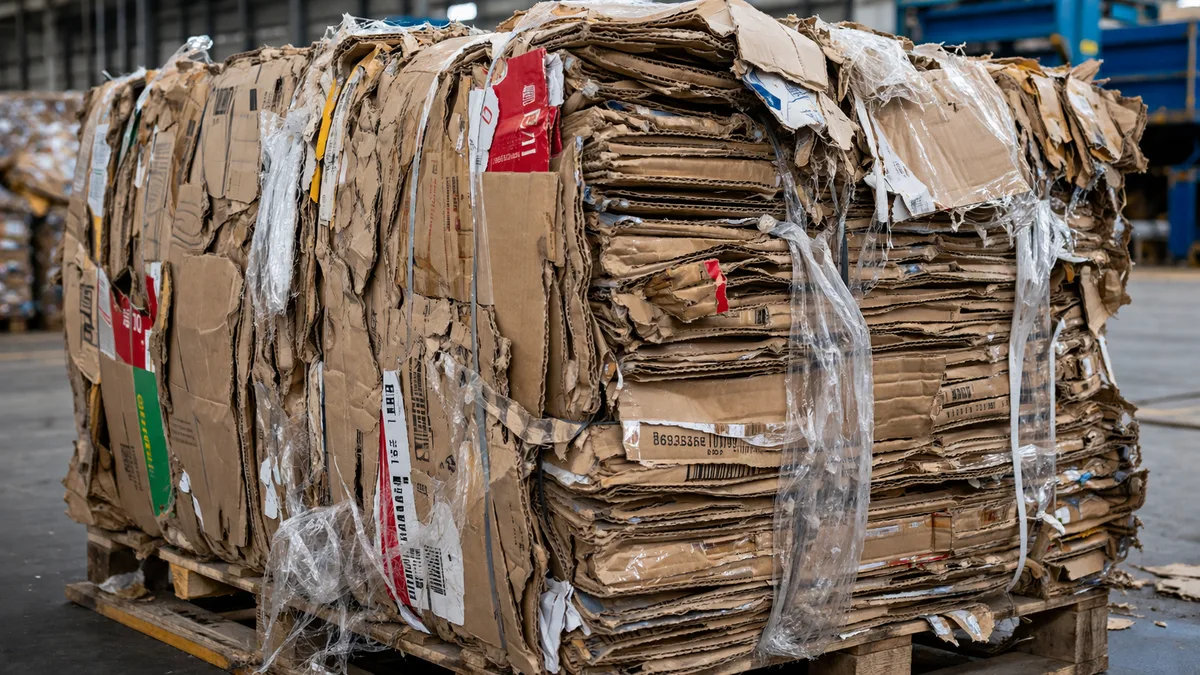
So the transition from ONP to OCC is not a fibre swap — it is a stock-preparation upgrade. The pulper, cleaner and screening line have to do far more work, and they have to do it without damaging the fibre.
The Four Contaminant Classes in OCC
Every OCC contaminant falls into one of four classes, and each is removed by a specific Parason equipment stage:
| Contaminant | Source | Impact on Egg Trays | Parason Removal Method |
|---|---|---|---|
| Heavy metals | Aluminum foil, staples, clips, coatings | Visible defects, structural weak points | High-density hydrocyclones, magnetic separation |
| Plastic films & stickies | Shrink wrap, packing tape, hot-melt adhesives | Sticky residue, holes, surface defects | Stickies flotation, coarse pressure screening |
| Ink & toner | Printing inks, toner residues | Discoloration, ash buildup, brightness loss | Flotation cells, ink-removal flotation |
| Debris & minerals | Glass, sand, dirt, wood splinters | Surface cracks, breakage, safety risk | Hydrocyclones, screening, wet cleaning |
The order matters — heavy material is dropped out first in cleaning so it never reaches the screens, plastic film is screened out before it can wrap rotors, and ink is floated off before bleaching chemicals are wasted on it. Skipping or swapping stages is the single most common mistake we see at OCC retrofits.
Why ONP-Era Lines Cannot Run OCC
Most existing egg tray facilities were designed and installed for ONP. When operators feed OCC into them, four problems show up almost immediately:
- Lower output. The pulper jams on plastic film and tape, and rejects-handling cannot keep up — so production rate drops.
- Higher operating cost. Energy per tonne goes up because traditional hydra-pulpers cut the fibre and waste shaft power on contaminants instead of defibering.
- Lower product quality. Trays show visible specks, weak corners and inconsistent surface finish — egg breakage in transit climbs above 2%.
- More rejections. Improper pulping and inadequate reject handling mean usable fibre ends up in reject streams, while contaminants end up in the product.
The root cause is the pulping system itself: traditional hydra-pulpers tend to cause significant fibre damage, resulting in weaker end products. OCC fibre is shorter than ONP fibre to begin with, so any further cutting in the pulper is fatal for tray strength. The fix is high-consistency pulping — covered next.
The Parason OCC Stock-Prep System
Parason's OCC egg-tray line is engineered around four equipment stages that work as a unit. Each stage solves a specific OCC problem the conventional ONP line cannot.
1. High-Consistency Helical Pulper (15–16%)
In conventional setups, low-consistency pulpers run at 5–6% consistency. Parason's high-consistency helical pulper runs at approximately 15–16%, which changes everything:
- Improved fibre separation (less unfiberised material reaching downstream)
- Minimal fibre cutting — fibre length is preserved
- Enhanced strength properties of the final product
- Better bulk development, giving superior cushioning in the egg tray
- Lower power consumption per tonne
- Efficient contaminant rejection thanks to the helical rotor design
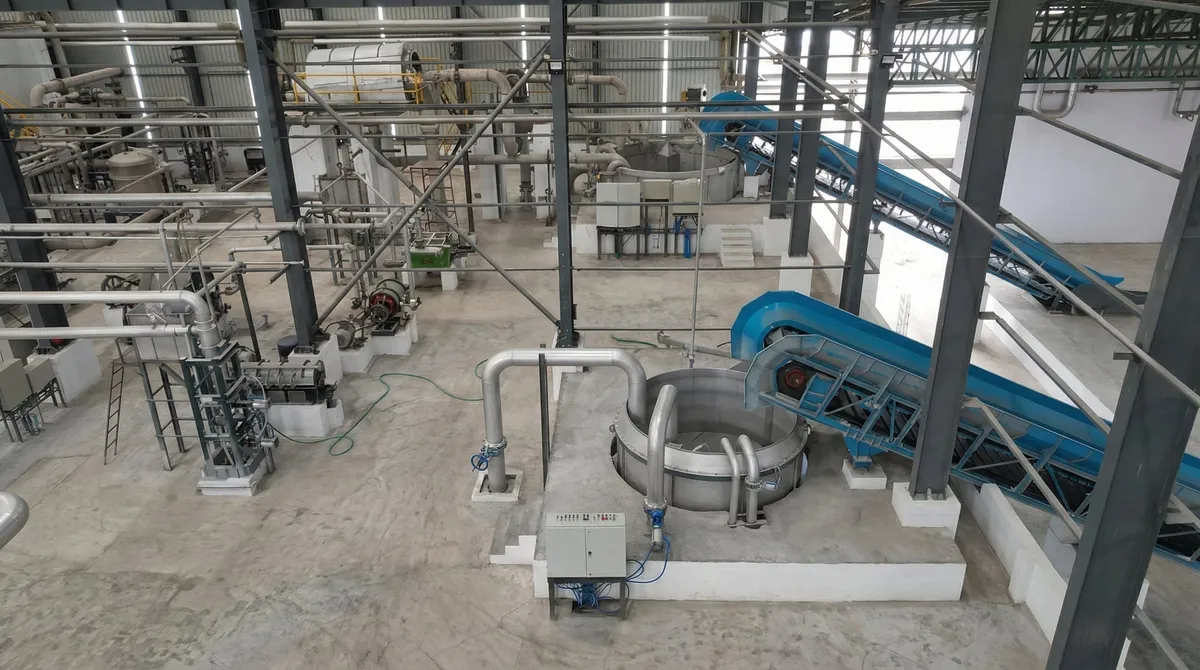
2. Dilution Pulper (DLP)
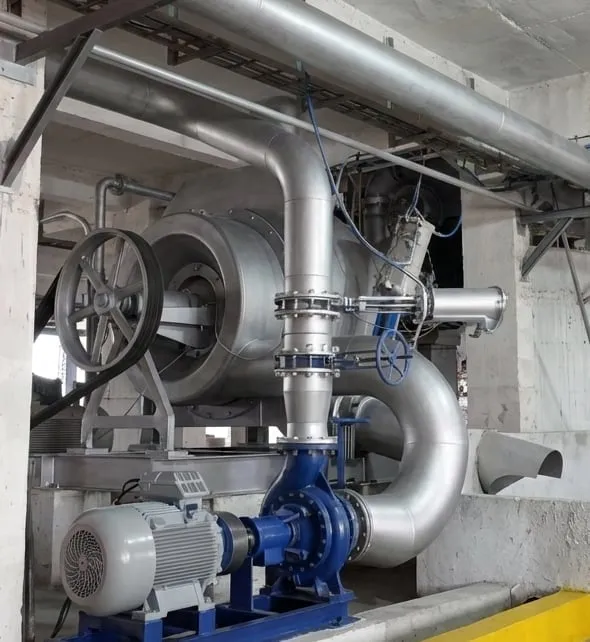
The Dilution Pulper sits after the HC pulper and handles the second stage of defibering. It is built for fast batch turnover and aggressive large-reject extraction, with an isolating valve that improves system flexibility:
- Efficient removal of contaminants with minimal fibre loss
- Quick readiness for the next batch — boosts overall throughput
- Effective elimination of large materials (rope, big plastic pieces)
- Prevents jamming and ensures smooth continuous operations
3. High-Density Ceramic Cleaner (HDCC)
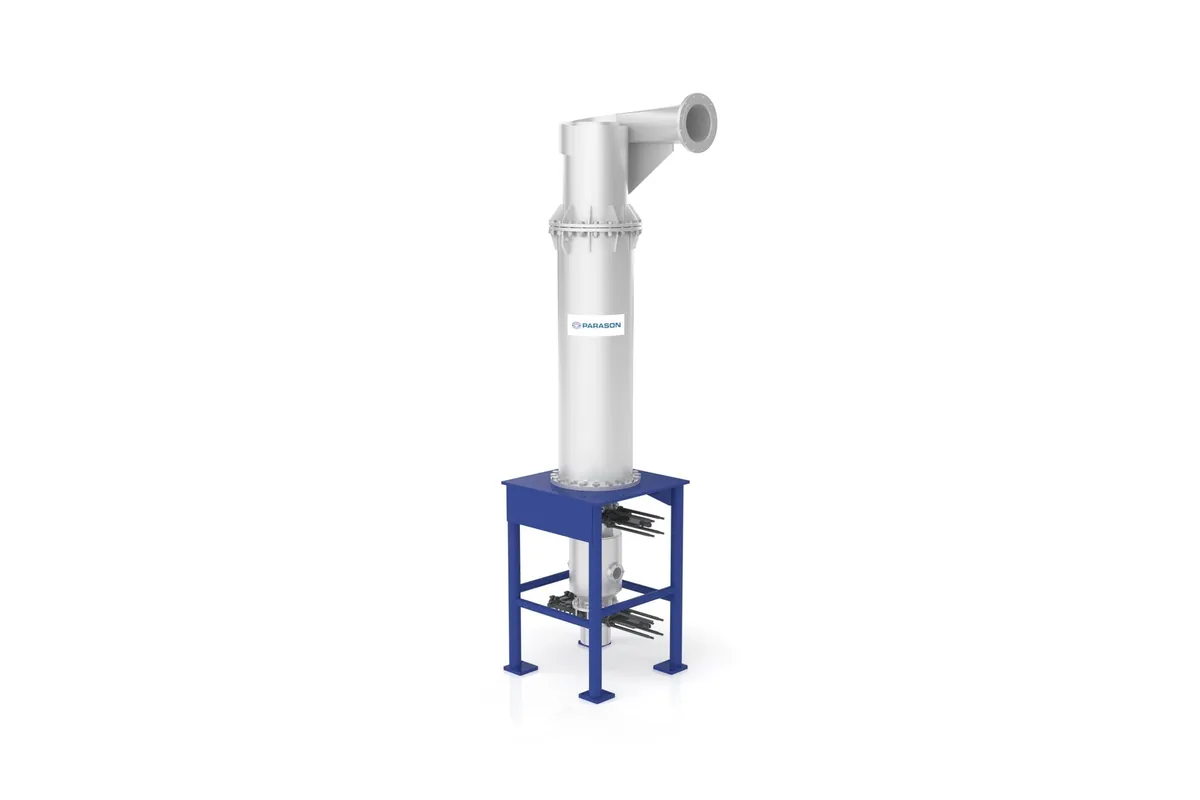
Once the pulp is properly defibered and diluted, the next problem is heavy material. Parason's high-density ceramic cleaner is non-motorised — it relies on the pump head and ceramic-lined cyclone geometry to drop out heavy contaminants:
- Efficient removal of heavy metals, sand, glass, grit
- Simple installation — no motor, no drives
- Ceramic lining protects downstream equipment for years
- Visual inspection ports for operator confidence
- Energy efficient — no rotating power consumption
4. Three-Stage Pressure Screening
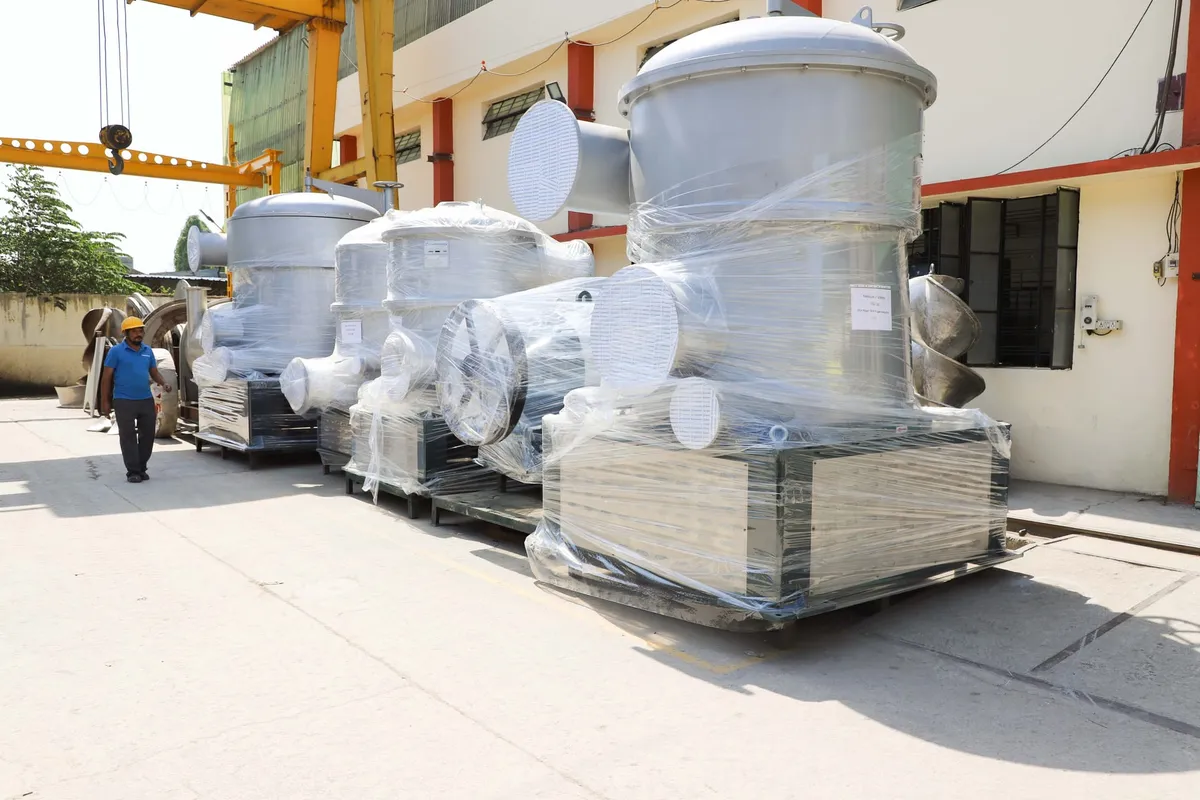
The final cleanup is a three-stage pressure screening system that catches plastic film, coarse fibre bundles and any remaining stickies. Three stages give cascading reject treatment so usable fibre is recovered from each stage's rejects, and only true contaminants leave the system:
- Primary screen: removes plastic film and oversize material
- Secondary screen: recovers good fibre from primary rejects
- Tertiary screen: final fibre recovery, drives reject volume to a minimum
Why Bulk Matters for Egg Trays — and How Parason Delivers It
Egg trays do one job: protect eggs in transit. The property that does that work is bulk — the volume of fibre per unit weight, which translates into shock absorption and structural integrity.
Bulk is created by long, separated, undamaged fibres. Cut the fibre in pulping, and bulk collapses; let the fibre clump because consistency is wrong, and the tray shows weak spots. With Parason's high-consistency system, higher bulk is achieved while maintaining very high strength in the final tray.
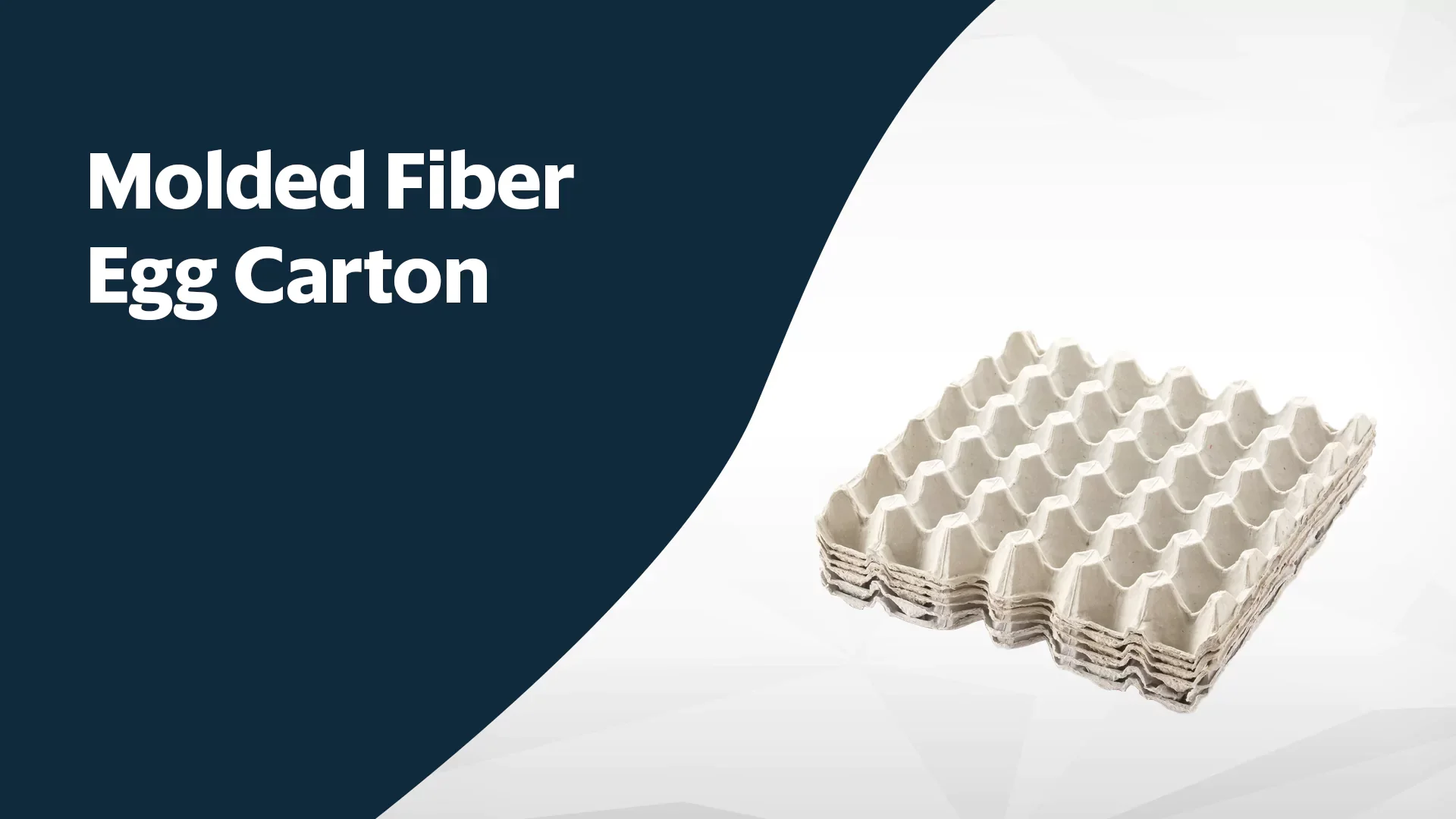
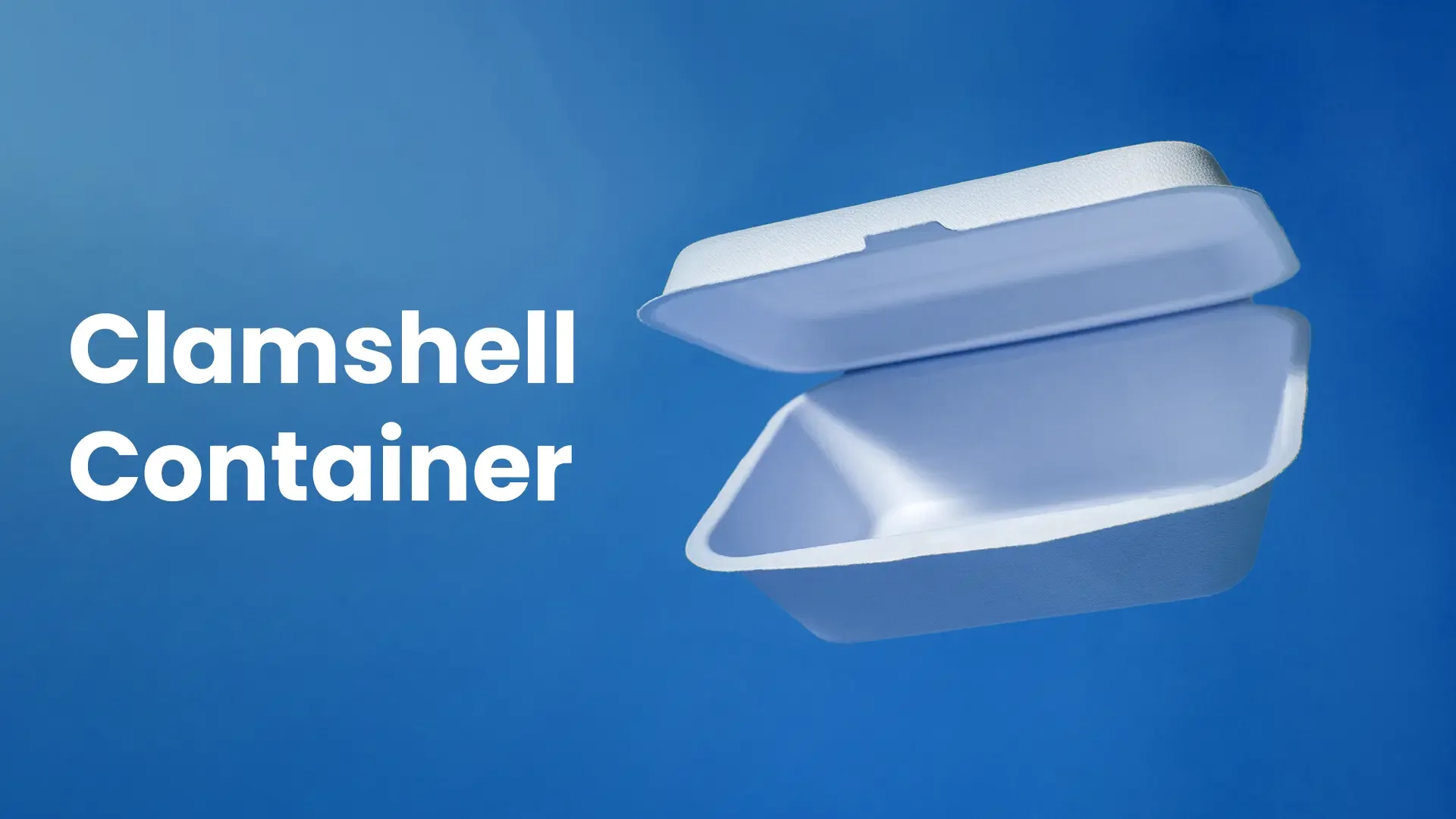
Operators on our line consistently report egg breakage under 2%, even on 100% OCC feed. Made from recycled paper and cardboard, the resulting molded pulp creates a breathable, eco-friendly and cost-effective packaging solution that out-performs plastic clamshells on protection while remaining fully compostable. For more on the molded-fiber product range, see molded fiber egg cartons and molded fibre production line.
Case Study: Hartmann × Parason — 110 TPD Sama Al Mask, Iraq
Hartmann is a global leader in sustainable, molded-fibre egg packaging. The company specialises in 100% recyclable, protective egg trays and cartons made from recycled paper, operating 17 manufacturing sites across Europe, North and South America and Asia (including India). Hartmann's customers include egg producers worldwide who need high-performance packaging engineered for automation, transport and retail with a strong sustainability focus.
Parason's value-added offerings for OCC stock preparation were evaluated by Hartmann and selected for their prestigious 100 TPD stock-preparation facility in the Netherlands. The same engineering team also delivered Hartmann's 110 TPD Sama Al Mask facility in Iraq.

Project summary — Sama Al Mask, 110 TPD:
- Capacity: 110 TPD
- Scope: entire stock-preparation system, supplied by Parason
- Hi-Consistency Pulper
- Dilution Pulper (DLP)
- High-Density Ceramic Cleaning (HDCC)
- Three-stage pressure screening
- All tanks and chests
- All instrumentation
- All controls
Selected Egg Tray Customers
The Parason OCC egg-tray system is in operation at producers across India, Iraq, Malaysia, Saudi Arabia and Turkey, with capacities from 10 TPD to 120 TPD:
| Customer | Location | Capacity (TPD) | Product | Year |
|---|---|---|---|---|
| Al-Khayrat Al-Haditha Co. | Iraq | 20 | Egg tray / apple tray | 2019 |
| Mohan Fiber Products Ltd. | India | 25–30 | Egg tray / apple tray | 2008 |
| Eppor-Pack Sdn Bhd | Malaysia | 10 | Egg tray / apple tray | 2015 |
| Al Ghadeer Egg Trays Plant | Saudi Arabia | 25–30 | Egg tray | 2019 |
| HZ Green Pulp Malaysia | Malaysia | 30 | Egg tray / apple tray | 2018–2020 |
| MG Fibers, Punjab | India | 30 | Egg tray / apple tray | 2019 |
| Olcan Kagit | Turkey | 60 | Egg tray | 2022–2023 |
| Keskinoglu Viol | Turkey | 120 | Egg tray | 2025 |
| Hartmann (Sama Al Mask) | Iraq | 110 | Egg tray | 2024–2025 |
Why Choose Parason
OCC egg-tray production is not a commodity business — it is a solutions business. Picking the right partner matters more than picking the lowest quoted price. Parason offers:
- Deep expertise in fibre processing — three decades of pulp and paper engineering across recycled, virgin and agro fibres.
- Multi-technology platform — pulping, cleaning, screening, refining, thickening and molded-fiber forming from one supplier.
- Integrated system approach — equipment is engineered to work as a unit, not bolted together from third-party parts.
- Local presence in India, global footprint — installations on every continent, with regional service teams.
- Cost-effective — engineered for thin-margin egg-tray economics, not paper-mill budgets.
Next Steps
If you are running an ONP egg-tray line and feeling the price squeeze, or planning a greenfield OCC molded-fiber plant, the path forward is straightforward:
- Audit your current fibre sourcing — how much ONP can you still reliably get, and at what price?
- Evaluate OCC availability in your region — bale quality, contamination level, supply contracts.
- Discuss the retrofit or new-build with Parason's technical team — pulping, cleaning, screening sizing.
- Explore a pilot installation or a detailed feasibility study before committing capex.