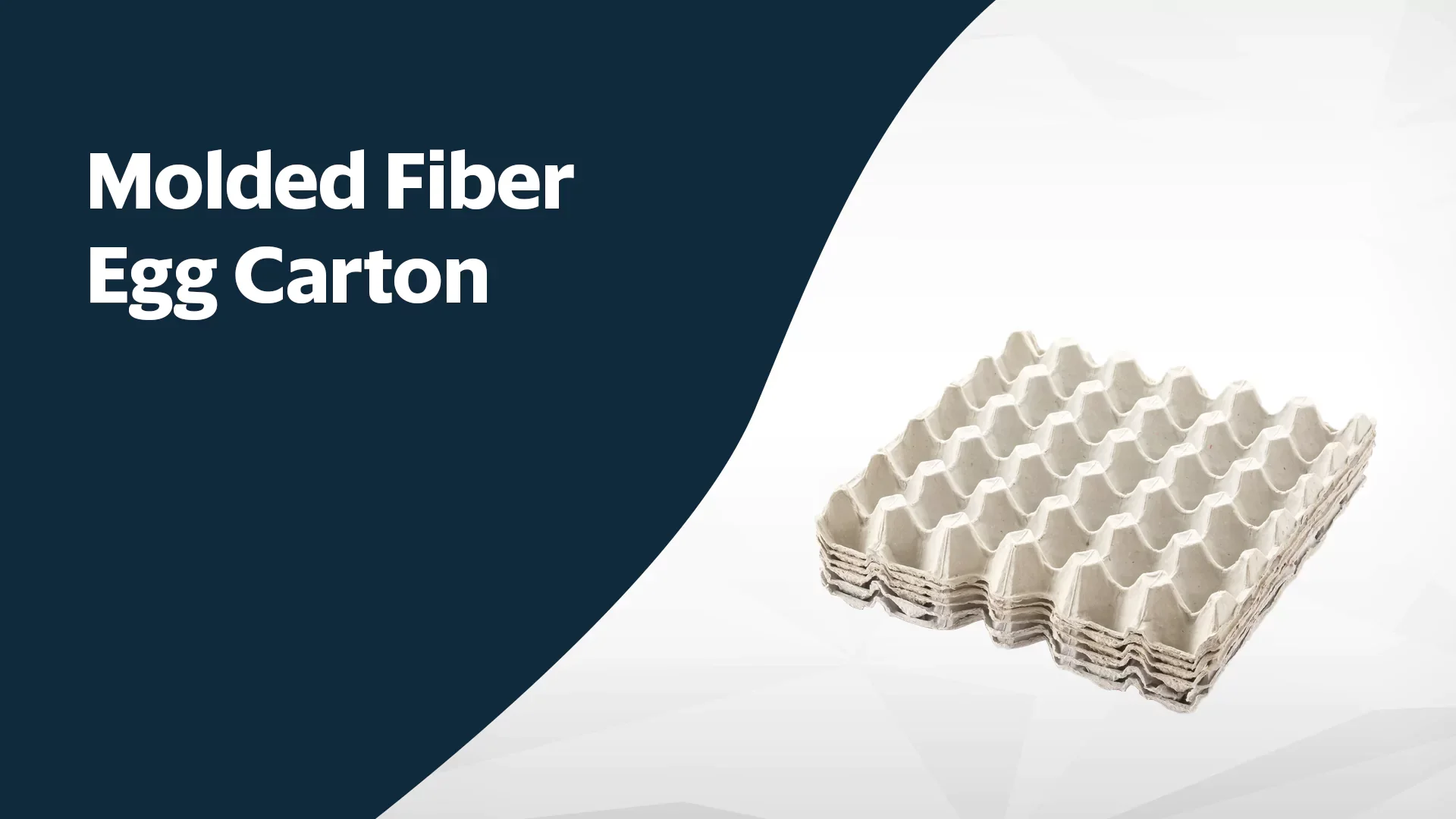
A paper pulp molding machine converts waste paper, sugarcane bagasse, bamboo, or other natural fibres into moulded products — egg trays, tableware, industrial packaging, medical trays, and more. The machine itself is the forming stage of the process, but production quality depends on everything that comes before it: how the pulp is prepared, how clean it is, how consistent the fibre distribution is. That is why the forming machine alone is only part of the equation.
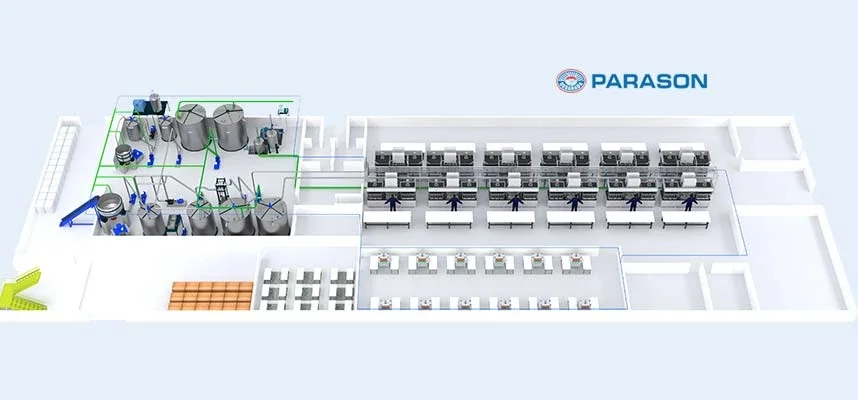
At Parason, we manufacture complete pulp molding production systems — from raw material pulping through stock preparation, forming, drying, trimming, and stacking. Our systems run from 3 TPD for small-scale operations to 100+ TPD for industrial-scale production, installed in 75+ countries. This guide covers how paper pulp molding machines work, the types available, capacity ranges, what products each type makes, and what a complete production system looks like.
How a Paper Pulp Molding Machine Works
The pulp molding process has four main stages. The forming machine — what most people call the “pulp molding machine” — is only one of them.
Stage 1 — Pulp Preparation (Stock Preparation): Raw material (waste paper, bagasse, bamboo, wheat straw, or wood pulp) is broken down into fibre in a pulper, then cleaned, screened, and refined to the right consistency and fibre length. This stage determines the quality of every product that comes off the forming machine. Poor stock preparation = inconsistent wall thickness, weak products, and high rejection rates. Learn more about stock preparation systems.
Stage 2 — Forming: Prepared pulp is drawn onto a shaped mold by vacuum. The fibre deposits on the mold surface in the exact shape of the final product. The wet moulded product is then transferred from the forming mold to a transfer mold.
Stage 3 — Drying & Hot Pressing: The wet moulded product is dried to the required moisture level. For basic thick-wall products like egg trays, tunnel drying is sufficient. For premium biodegradable tableware and industrial packaging, hot pressing compresses the product between heated moulds to create smooth surfaces and precise dimensions.
Stage 4 — Trimming & Finishing: For thermoformed products (plates, bowls, clamshells), edges are trimmed using hydraulic or hydro-pneumatic trimming machines. Products are then stacked and packed.
Types of Paper Pulp Molding Machines
Three main types of forming machines, each suited to different products, volumes, and quality requirements.
1. Rotary Pulp Molding Machine (PRF Series)
The rotary machine uses a rotating drum with multiple mold faces. As the drum rotates, each face cycles through pulp pickup, vacuum forming, and product transfer. Continuous rotation gives rotary machines the highest output of any forming type.
Best for: Egg trays, fruit trays, cup carriers, seed trays, shoe inserts — thick-wall products where speed matters more than surface finish.
| Model | Mold Faces | Capacity (pcs/hr) | Best Application |
|---|---|---|---|
| PRF-1 | 8 × 6 | 8,000 | High-volume egg tray production |
| PRF-2 | 8 × 6 | 6,000 | Egg trays, fruit trays |
| PRF-3 | 8 × 5 | 5,000 | Medium-volume trays |
| PRF-4 | 8 × 4 | 4,000 | Mixed products |
| PRF-5 | 8 × 3 | 3,000 | Smaller operations, specialty trays |
2. Reciprocating Pulp Molding Machine
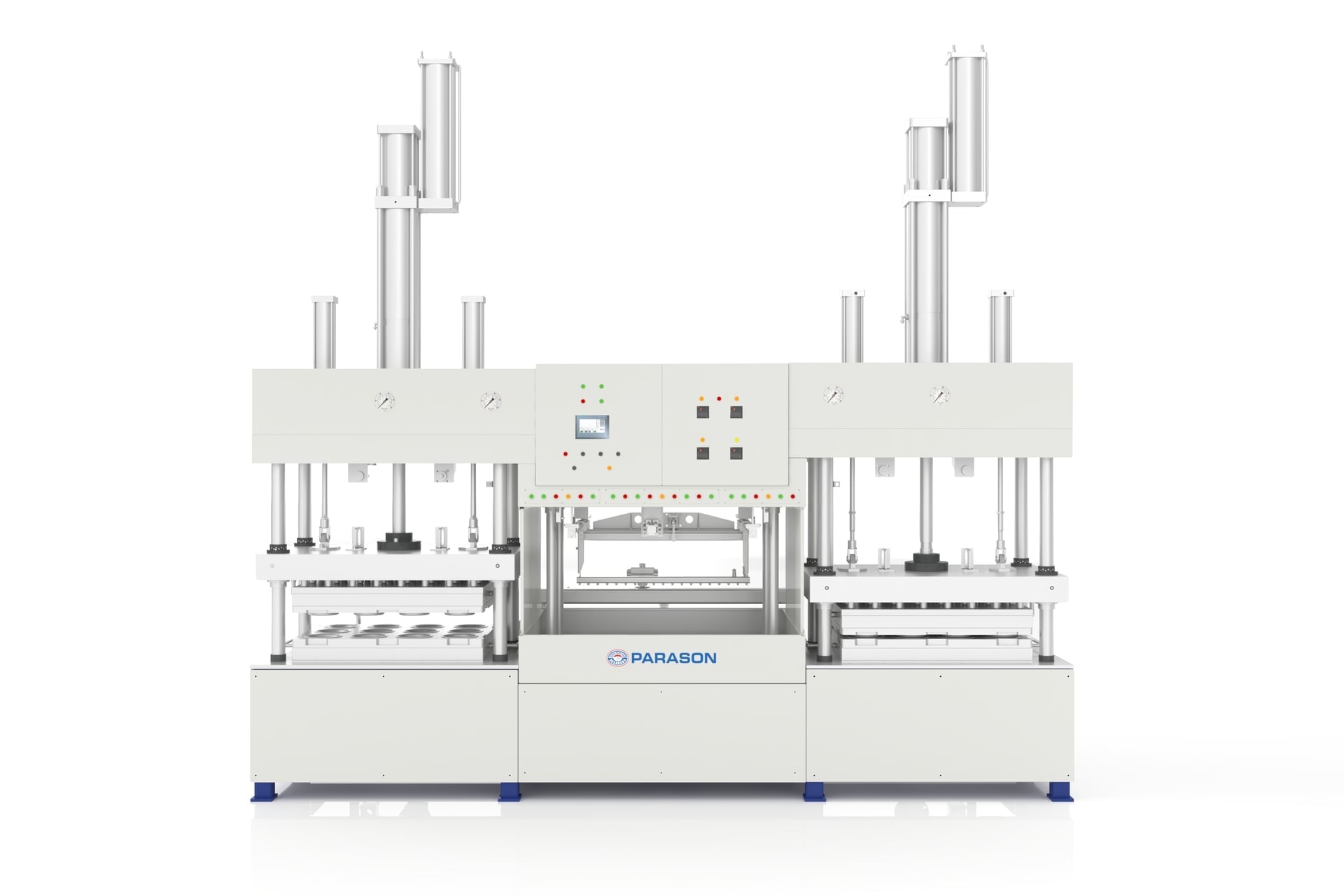
The reciprocating machine uses a dipping-type mechanism — the mold platen dips into the pulp tank, forms the product by vacuum, rises, and transfers the wet product. It offers better dimensional accuracy than rotary machines and can produce more complex shapes.
Best for: Industrial packaging (electronics protection, appliance cushions), transfer-moulded tableware, medical trays, cosmetics packaging.
Parason reciprocating forming machines are available in multiple platen sizes to suit different production volumes and product dimensions — from small-batch specialty packaging to large-format industrial applications.
3. Automatic Flatbed Forming Machine (PFA Series)
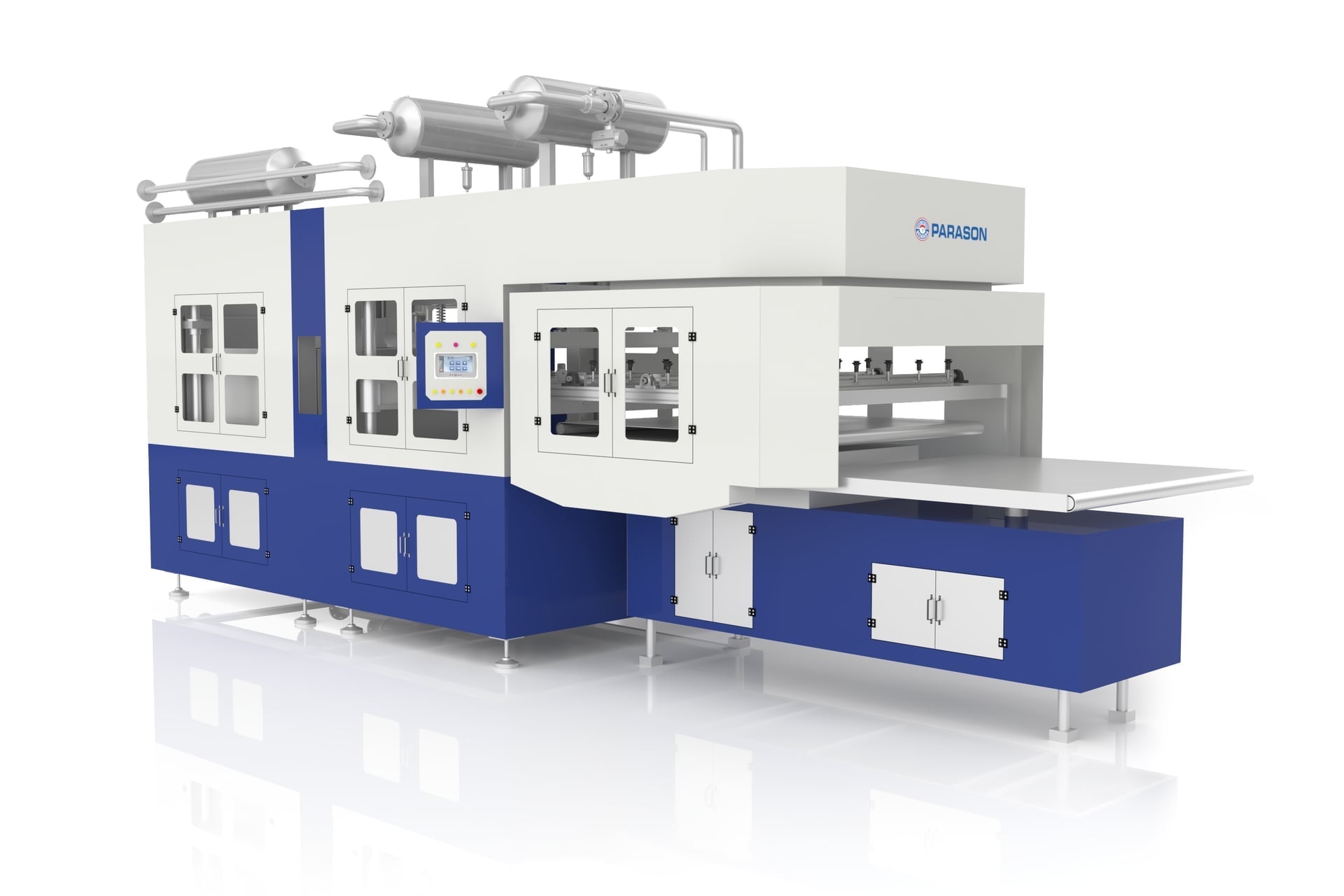
The flatbed forming machine uses a reciprocating dipping-type forming system combined with an integrated hot press. This produces thermoformed products — the highest quality category in molded fibre. Both surfaces are smooth, wall thickness is precise, and the finished product looks and feels premium.
Best for: Premium tableware (plates, bowls, clamshells), meal trays, containers, cosmetics packaging, medical trays.
| Model | Platen Size (mm) | Output (kg/day) | Key Feature |
|---|---|---|---|
| PFA-S1500 | 1500 × 1500 | 700–850 | 1500mm platen — more products per cycle |
| PFA-S1300 | 1300 × 750 | 350–500 | High-volume tableware |
| PFA-D1000 | 1000 × 950 | 350–500 | Dual hot press for faster cycles |
4. Other Forming Machines
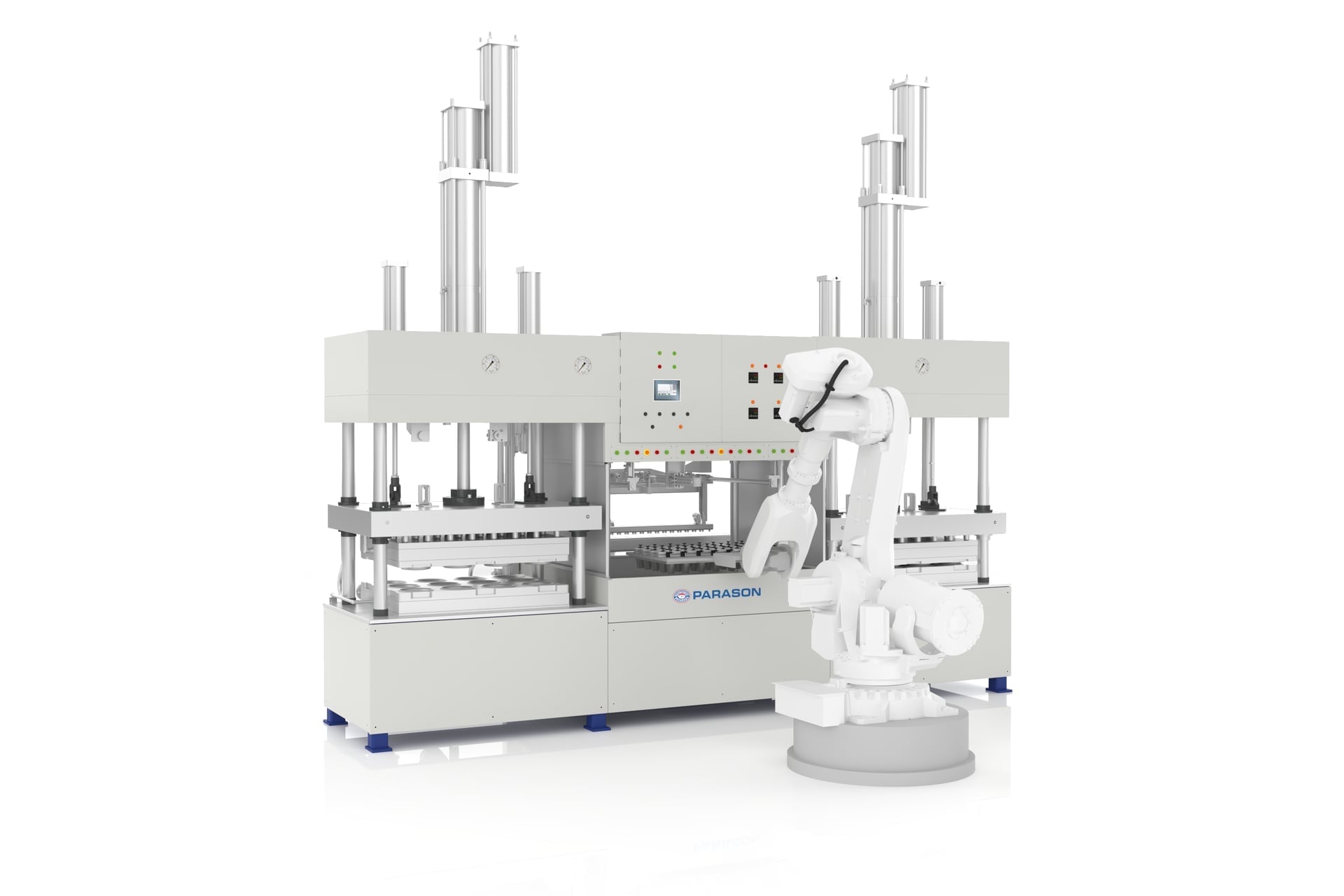
- Robotic Forming Machine: 6-axis industrial robot for ultra-precision forming. Complex shapes, specialty packaging, prototype runs.
- Semi-Automatic Forming Machine: Output up to 500 kg/day. Lower capital cost entry point for small-scale operations.
Which Machine Type Do You Need?
| Product | Recommended Machine | Quality Level |
|---|---|---|
| Egg trays | PRF (Rotary) | Thick-wall |
| Fruit trays, cup carriers | PRF (Rotary) | Thick-wall |
| Plates, bowls | PFA (Flatbed) | Thermoformed (premium) |
| Clamshells, meal trays | PFA or Reciprocating | Thermoformed |
| Industrial packaging | Reciprocating | Transfer moulded |
| Medical trays | Reciprocating | Transfer moulded |
| Cosmetics packaging | PFA (Flatbed) | Thermoformed |
Why the Forming Machine Alone Is Not Enough
Most pulp molding machine searches lead to standalone forming machines. These machines work, but they are only the forming stage. What happens before forming determines your product quality, consistency, and rejection rate.
A complete pulp molding production system includes:
- Pulper — breaks raw material into fibre
- Cleaning system — removes contaminants (plastics, metals, staples, adhesives)
- Screening system — removes oversized particles, ensures uniform fibre size
- Refining — adjusts fibre length for optimal bonding
- Consistency regulation — maintains exact fibre-to-water ratio for uniform wall thickness
- Molded fiber machine manufacturer — PRF, Reciprocating, or PFA forming machines
- Drying system — tunnel dryer (thick-wall) or hot press (thermoformed)
- Trimming — hydraulic or hydro-pneumatic edge trimming for premium products
Parason supplies complete turnkey molded fibre systems — from raw material intake to finished product stacking. This includes the stock preparation line, forming machines, drying systems, trimming machines, and mould manufacturing. We also offer a rapid prototyping service for testing new product designs before committing to production-scale moulds.
Molded Fibre Product Types
1. Thick-Wall Products — Rough finish, single-mold process. Products: egg trays, fruit trays, cup carriers, seed trays, shoe inserts. Made on rotary machines (PRF series). Highest volume, lowest cost per piece.
2. Transfer Moulded Products — One smooth side, one textured side. Two-mold process. Products: industrial packaging, electronics cushions, appliance protection. Made on reciprocating machines.
3. Thermoformed Products — Both sides smooth, precise wall thickness, premium finish. Multi-stage heated pressing. Products: plates, bowls, clamshells, meal trays, cosmetics trays, medical trays. Made on flatbed machines (PFA series).
4. Processed Products — Thermoformed base with additional finishing: toasting (colour), coating (moisture barrier), printing (branding), cutting (custom shapes). Premium end of molded fibre — 100% biodegradable and compostable.
Raw Materials for Pulp Molding
Parason stock preparation systems handle:
- Waste paper / OCC — Most common. Available globally.
- Sugarcane bagasse — Agricultural waste from sugar mills. Strong, light-coloured products.
- Bamboo — Fast-growing, high-fibre content.
- Wheat straw — Agricultural waste.
- Hardwood / Softwood pulp — Virgin fibre for highest quality applications.
Capacity Planning: 3 TPD to 100+ TPD
| Scale | Capacity | Typical Products | Suited For |
|---|---|---|---|
| Small | 3–5 TPD | Egg trays, basic trays | New entrants |
| Medium | 10–30 TPD | Tableware + egg trays | Growing businesses |
| Large | 50–100+ TPD | Full product range | Industrial-scale |
For project evaluation, contact our engineering team.
Why Parason for Pulp Molding Systems
- Complete turnkey systems — stock preparation through finished product
- 3 TPD to 100+ TPD — small egg tray operations to industrial-scale
- In-house mould manufacturing — 25+ VMC machines
- Rapid prototyping — test product design before production moulds
- Raw material flexibility — waste paper, bagasse, bamboo, wheat straw, wood pulp
- 75+ countries — installations with on-site commissioning and training
- 50+ years — engineering experience in pulp and paper technology
- Stock preparation expertise — decades of fibre processing knowledge
Related reading: Sugarcane Bagasse Plate Making Machine | Molded Fiber Egg Cartons | Molded Fiber Clamshell Containers