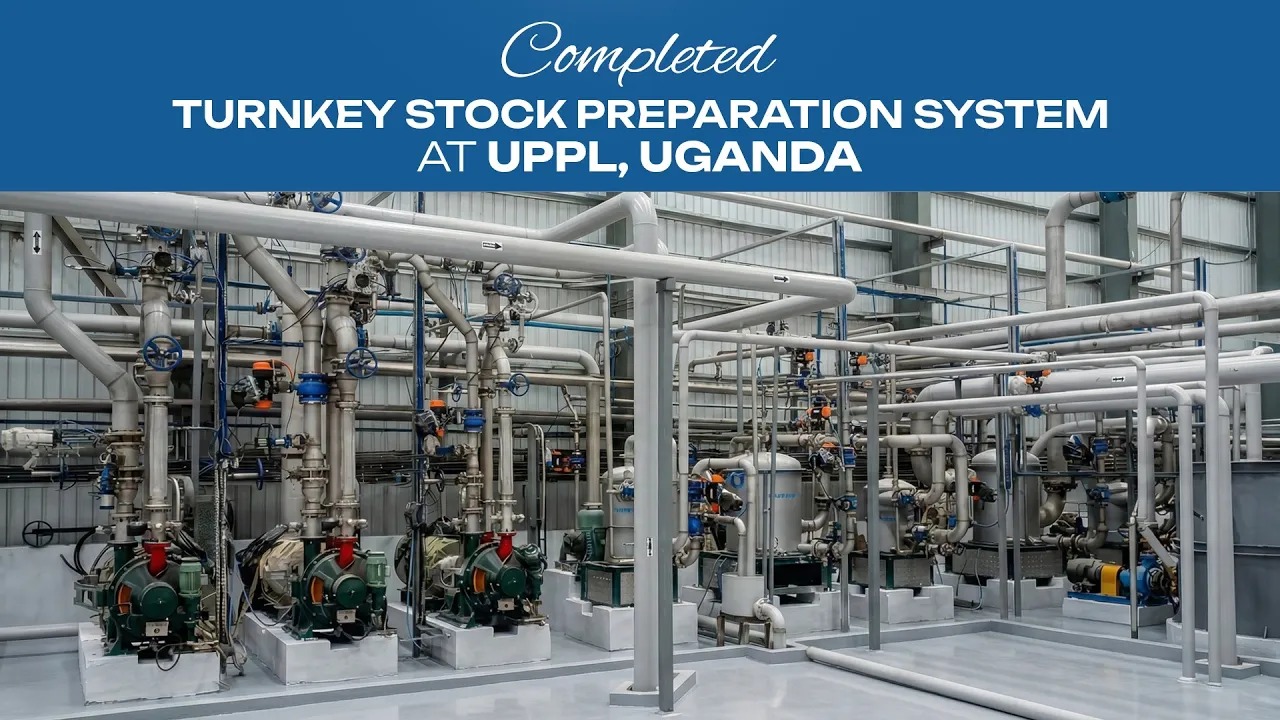
Uganda Pulp & Paper Mills Ltd (UPPL) in Jinja, Uganda, now has a fully operational 100 TPD de-inking plant, stock preparation system and approach flow system, supplied and commissioned by Parason on a turnkey basis. The line turns office cuttings and sorted office paper (SOP) into clean, bright stock for UPPL's writing & printing and tissue paper grades. It has reached the pulp brightness UPPL required with very low fiber loss, and UPPL has awarded Parason a Certificate of Performance & Appreciation.
Project at a Glance
- Client: Uganda Pulp & Paper Mills Ltd (UPPL), Jinja, Uganda
- Capacity: 100 TPD
- Paper grades: Writing & printing paper and tissue paper
- Furnish: Office cuttings and sorted office paper (SOP)
- Scope: Complete de-inking plant, stock preparation system and approach flow system, turnkey
What the Project Means for UPPL
For a mill making white paper grades from recycled fiber, de-inking decides both product quality and cost. Reaching the target brightness keeps the paper saleable, and low fiber loss means more of every tonne of waste paper ends up as paper instead of reject. UPPL now has both from one integrated line.
UPPL also worked with a single partner for the whole project. Parason handled basic and detailed engineering, equipment manufacture and supply, process piping, installation and erection, DCS automation, commissioning, operator training and formal handover, so the mill had one point of contact from design to start-up.
Results Achieved
| Parameter | Result |
|---|---|
| Pulp brightness | Required brightness achieved as per design specifications |
| Fiber loss | Very low fiber loss from the de-inking system |
| Paper grades | Successfully producing both writing & printing paper and tissue paper |
| Production goals | Met as per design specifications |
| Plant automation | Fully automated DCS ensuring reliable and efficient operation |
| Time to results | Operational within one day of commissioning |
What UPPL Says
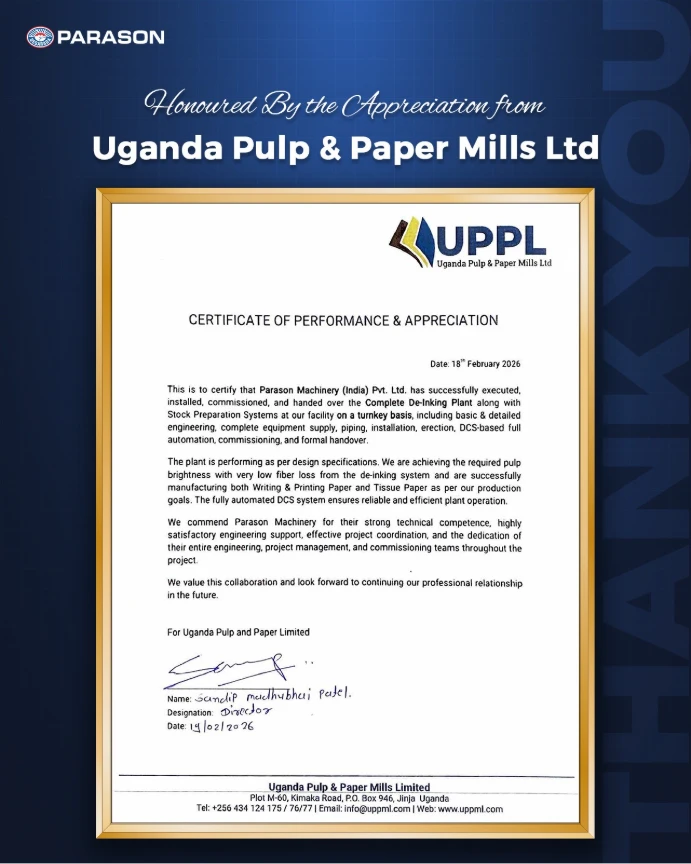
In February 2026, UPPL awarded Parason a Certificate of Performance & Appreciation. It confirms that the plant is performing as per design specifications and that UPPL is successfully producing both writing & printing paper and tissue paper as per its production goals. UPPL commended Parason for its strong technical competence, highly satisfactory engineering support, effective project coordination, and the dedication of its engineering, project management and commissioning teams.
“We value this collaboration and look forward to continuing our professional relationship in the future.”
Sandip Madhubhai Patel, Director, Uganda Pulp & Paper Mills Ltd
How the Line Works
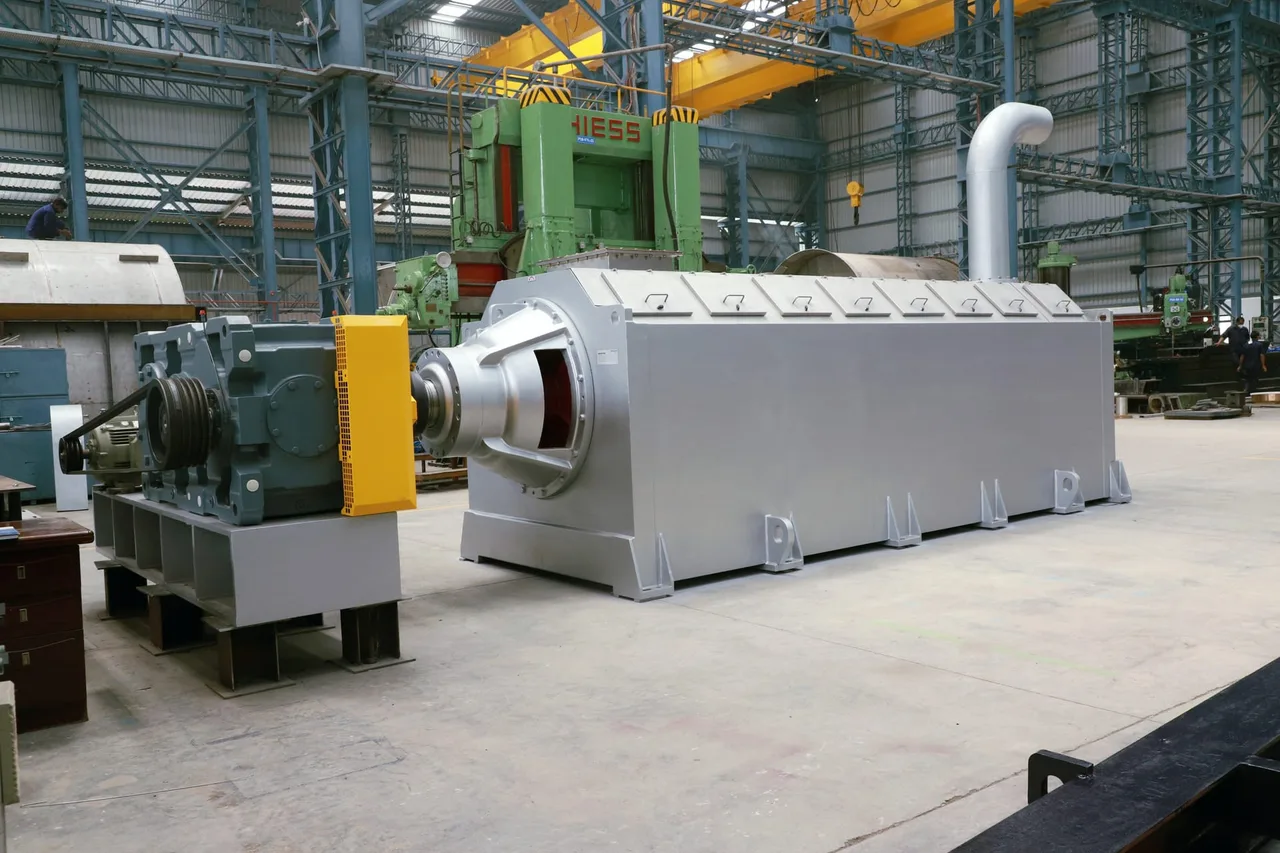
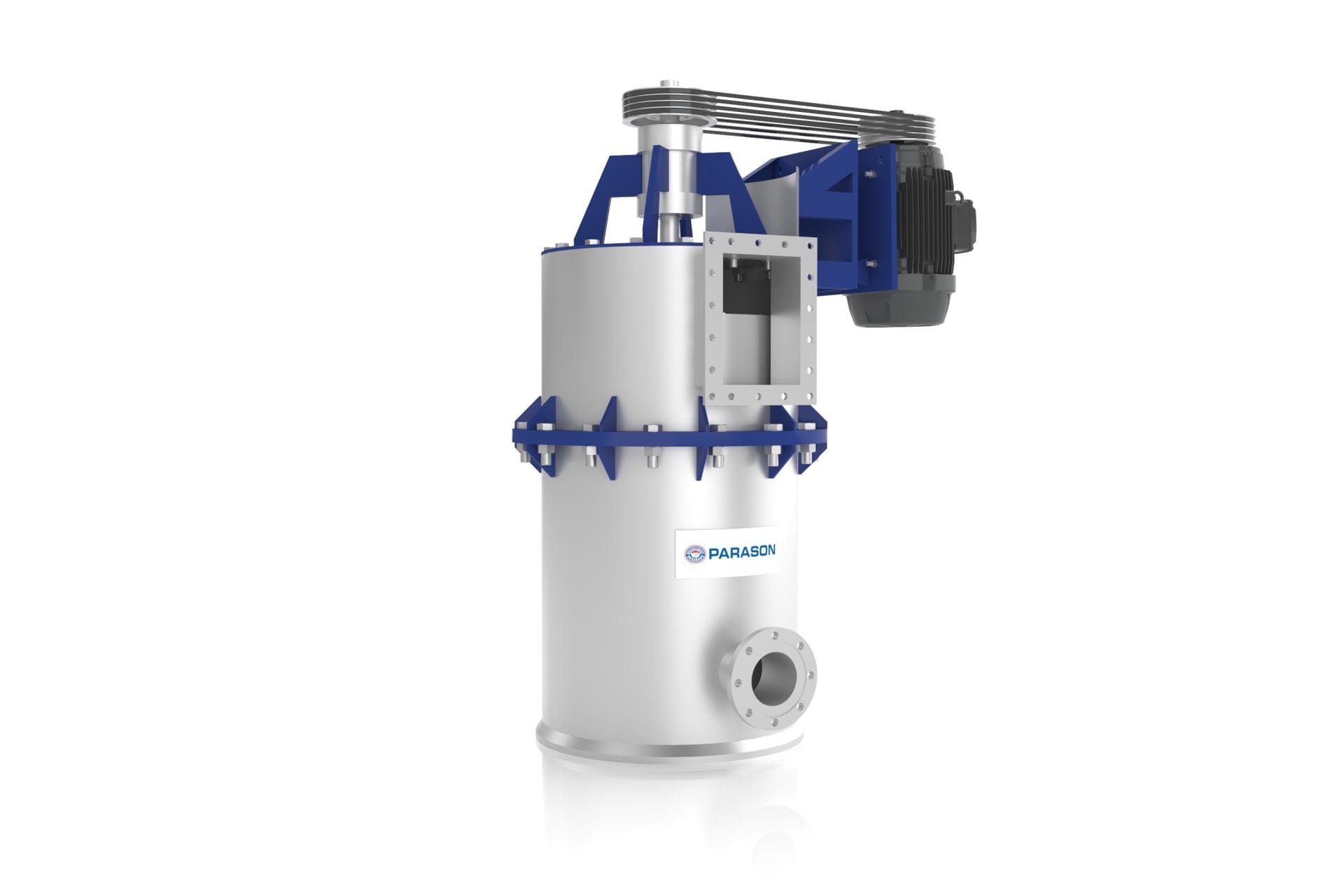
Office cuttings and SOP are first pulped in a Hi-Con Pulper. The stock then passes through cleaners and screens in several stages, which take out sand, plastics and other contaminants. Multi-cell flotation, with a pre-deinking stage and a main de-inking stage, removes the ink.
The clean stock is thickened with decker thickeners, Parason disc filters and a screw press, treated in a disperser system and a Parason oxidation bleach tower, and refined with brushing refiners and TDR series disc refiners. Rejects and process water are handled by a reject sorter, a belt filter press and an effluent treatment plant. The entire plant is operated from a DCS control room.
Planning a Similar Project?
If your mill is adding de-inking or upgrading stock preparation for recycled fiber, Parason can take on the full scope, from process design to commissioning. Founded in 1976, Parason has installed 522+ pulp lines worldwide and exports to 75+ countries.
Talk to our engineering team about your project.