Paper Industry in India: Market Size, Growth & Investment Outlook (2026)
India is the fastest growing major paper market in the world. Demand is expanding at 6-8% annually — driven by packaging for e-commerce and FMCG, rising literacy and education spending, and the government’s sustained push toward a formal, documented economy. With production at approximately 25 million tonnes per year and consumption projected to reach 30 million tonnes by FY2027, the gap between where the industry is and where it needs to be represents one of the largest manufacturing investment opportunities in the country.
At Parason, we have been manufacturing paper mill machinery for over 50 years. We have supplied equipment to 500+ mills across 75+ countries — and a significant share of those are in India. This gives us a ground-level view of how the industry is actually performing, where capacity is being added, and where the real bottlenecks are. This article presents the current state of the paper industry in India with data from IPMA (Indian Paper Manufacturers Association), IBEF, and industry sources — along with our perspective as a paper mill machinery manufacturer embedded in this ecosystem.
India’s Paper Industry: Key Numbers (2025-26)
| Metric | Value | Source |
|---|---|---|
| Market size | ₹1,00,000+ crore (~$12B USD) | IPMA |
| Annual production | ~25 million tonnes | IBEF |
| Number of mills | 850+ (526 operational) | IBEF |
| Annual growth rate | 6-8% (packaging 8.2%) | PrintWeek |
| Projected consumption (FY2027) | 30 million tonnes | PrintWeek |
| Projected production (FY2030) | 28-30 million tonnes | Industry estimates |
| Direct employment | 5,00,000 | IPMA |
| Indirect employment | 15,00,000 | IPMA |
| Contribution to exchequer | ₹5,000+ crore annually | IPMA |
| Global ranking | Among top 5 producers | Infomerics |
India’s per capita paper consumption remains at approximately 16 kg — compared to a global average of 57 kg and over 100 kg in developed economies (IPMA, Infomerics). This gap is what makes the growth story compelling: as India’s economy formalises, urbanises, and as e-commerce penetration deepens, paper consumption per person will rise steadily. Even a modest increase in per capita consumption, applied to 1.4 billion people, translates to millions of additional tonnes of annual demand.
Paper Industry Segments: Where the Growth Is
The paper industry in India is not one market — it is several distinct segments growing at very different rates.
Packaging Paper & Paperboard (65% of market — Fastest growing)
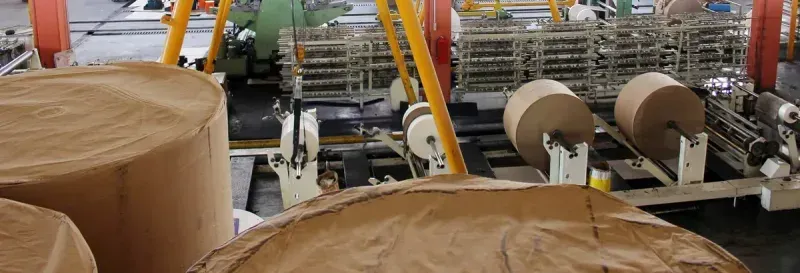
Packaging paper and paperboard accounts for approximately 15.5 million tonnes of India’s annual consumption — nearly 65% of the total market. According to IPMA and PrintWeek India, this segment is growing at 8.2% annually.
The drivers are structural, not cyclical:
- E-commerce growth — Every online order ships in corrugated packaging.
- FMCG packaging — Products sold loose are now packaged. Permanent shift.
- Sustainability regulations — Government restrictions on single-use plastics push brands to paper and molded fiber packaging.
- Export packaging — India’s manufacturing exports require quality packaging.
From a machinery perspective, this means demand for kraft paper machines in the 30-300 TPD range. Raw material is primarily recycled fibre (OCC), processed through modern stock preparation systems. The kraft pulping process is the backbone of this segment.

Writing & Printing Paper (Steady demand)
Steady demand driven by India’s education sector — the world’s largest by student population. Growth subdued compared to packaging due to digitalisation. Modern paper machines with energy-efficient headbox systems and forming technology are replacing older equipment in this segment.
Tissue Paper (Fastest emerging segment)
Per capita tissue consumption in India is a fraction of global averages, but urban demand is accelerating — hospitality, healthcare, food service, urban households. Double-digit growth expected in urban India.
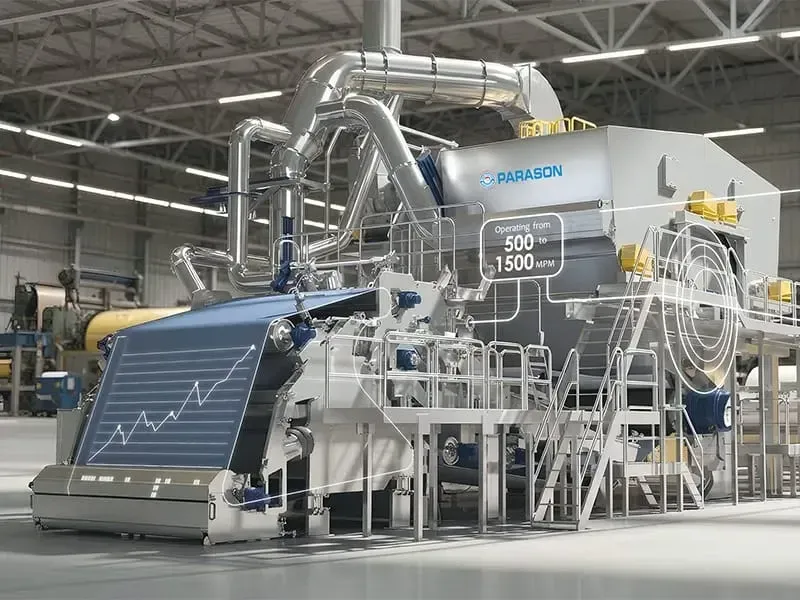
Tissue machines from 10-100 TPD are viable entry points. For a detailed breakdown, see our guide on tissue paper manufacturing costs and the complete tissue paper production line process.
Specialty & Technical Paper (Niche, high-value)
Thermal paper, filter paper, security paper, transformer insulation board. Smaller segment but higher margins and import-substitution potential.
Newsprint (Declining)
Structural decline as print media falls. Global trend. New investment not recommended.
Capacity Expansion: Major Investment Underway
According to PrintWeek India, manufacturers across India are implementing significant capacity expansion. The industry needs approximately 1 million tonnes of new capacity annually to meet projected demand of 30 million tonnes by FY2027.
Major ongoing projects:
- Large-scale greenfield projects in Maharashtra targeting 1+ million TPA
- Mid-scale kraft and packaging lines (50-200 TPD) across Tier 2/3 cities
- Technology upgradation — replacing older machines with modern, energy-efficient systems
- Tissue capacity additions near metro cities
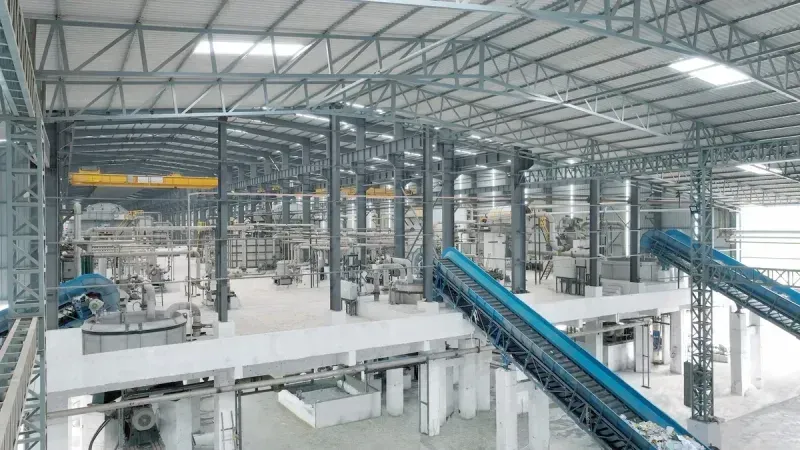
Parason is directly involved in many of these — from stock preparation upgrades to complete turnkey paper mill installations. Whether it’s a recycled paper mill or a greenfield paper mill plant setup, our engineering team handles the complete project lifecycle.
Challenges Facing India’s Paper Industry
Growth is real, but so are the challenges faced by paper manufacturers. From our experience working with hundreds of Indian paper mills:
1. Raw Material Availability
India faces chronic fibre shortage. No industrial forestry plantations permitted. Industry relies on:
- Recycled fibre — Domestic waste paper collection rate is approximately 50% versus 80-90% in developed countries. India imports an estimated 7 million tonnes of waste paper annually (Infomerics).
- Agricultural residues — Bagasse, wheat straw, rice straw. Environmental solution (reduces crop burning) and economic opportunity. Parason agro-fibre pulping systems and pulping machines are designed for these raw materials. See our guide on bagasse processing and tableware machinery.
- Imported wood pulp — For writing, printing, tissue grades. Subject to price volatility.
2. Water and Energy Consumption
Paper manufacturing is water and energy intensive. Modern mills consume 25-40 m³ water per tonne (down from 150+ two decades ago). Energy costs remain a major cost component — energy-efficient machinery like Parason’s twin disc refiners with 20% lower energy consumption is a competitive necessity.
3. Environmental Compliance
CPCB and SPCB norms tightened significantly. ETPs mandatory, zero liquid discharge increasingly expected. Every Parason turnkey project includes ETP systems for industrial wastewater treatment. Our effluent treatment plants are designed to meet the latest environmental standards.
4. Technology Upgradation
Many of India’s 850+ mills operate aging equipment (IBEF). Energy consumption, water usage, and output quality all suffer on older machines. Mills investing in modern stock preparation, new headboxes, shoe presses, and automation are gaining market share. Proper screening equipment like trommel screens and pressure screens make a measurable difference in quality and efficiency.

Future of Paper Industry in India: Investment Outlook
| Factor | Why It Matters |
|---|---|
| 6-8% annual demand growth (IPMA) | Structural — packaging, education, urbanisation |
| 16 kg per capita vs 57 kg global (IPMA) | Massive headroom for growth |
| Major capacity expansion underway (PrintWeek) | Industry investing — confidence signal |
| ~7M tonnes waste paper imported (Infomerics) | Import substitution opportunity |
| Government policy support | Packaging regulations favoring paper over plastic |
| Agro-residue availability | Unique raw material advantage — bagasse, wheat straw |
| Growing manufacturing base | As India becomes manufacturing hub, packaging demand follows |
For investors: which grade (packaging = lowest risk), what capacity (30-100 TPD = sweet spot for new entrants), which technology partner. See our comprehensive guide on how to set up a paper mill plant.
Parason’s Perspective: What We See on the Ground
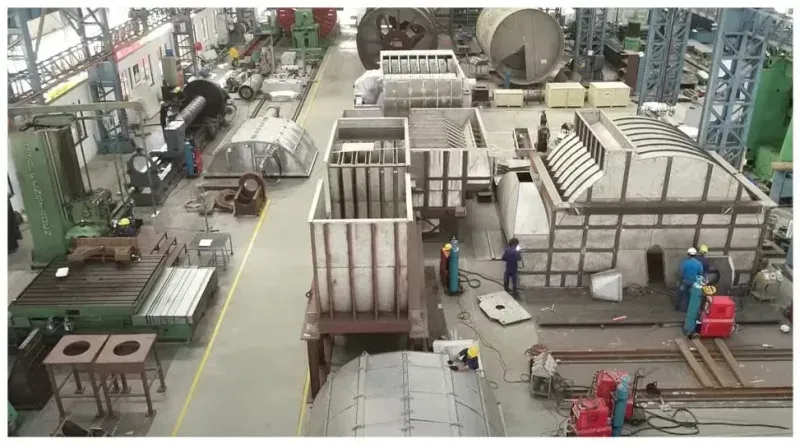
As a paper mill machinery manufacturer in Gujarat with 50+ years and 500+ installations across 75+ countries:
- The shift to packaging is accelerating faster than data suggests — more enquiries for kraft paper machines and corrugated machines than any other grade, including from first-time investors.
- Tissue is real but concentrated — viable near metro cities where demand density justifies imported virgin pulp cost. Our tissue machines from 10-100 TPD cover the full range.
- Technology upgradation is the hidden story — many enquiries are for upgrades (stock preparation replacement, shoe press addition, modern headboxes), not new mills.
- Agro-residue based mills are increasing — driven by economics and policy (government incentives to reduce crop burning). Our agro-fibre pulping systems are engineered for Indian raw materials.
- Entry threshold is lower than most think — viable kraft mill starts at 30 TPD, within MSME financing reach. See how to set up a paper mill plant for the complete guide.