Tissue paper manufacturing cost depends on four main factors: production capacity in TPD (tons per day), raw material route, machine configuration, and plant location. A small tissue mill of 5 to 20 TPD using recycled waste paper is substantially less capital-intensive than a 50 to 100 TPD virgin-pulp mill producing premium toilet paper or kitchen towel. Exact project cost is finalised after target capacity, grade, and location are defined.
This guide covers what drives tissue paper manufacturing cost, how capacity and raw material choices change the investment profile, what determines profitability, and what investors in India, Nigeria, South Africa, and other markets should account for before breaking ground. It draws on Parason Machinery's 50+ years of experience commissioning tissue machines from 5 TPD to 100 TPD across 75+ countries, including a 50 TPD tissue line at Viking Kait.
What Determines Tissue Paper Manufacturing Cost
Tissue paper manufacturing cost is not a single number. It is a range driven by five independent factors. Understanding each factor helps investors model the cost curve for their specific project rather than rely on a generic benchmark.
1. Production capacity (TPD)
Capacity is the single largest cost driver. Larger machines cost more in absolute terms but less per tonne of finished tissue. A 10 TPD machine serves regional distribution for hotels, restaurants, and institutional buyers. A 50 to 100 TPD machine feeds national branded FMCG supply chains. The capacity decision must follow realistic market demand, not catalogue ambition.
2. Raw material route
Virgin pulp (bleached hardwood kraft, BHK) produces the softest, brightest tissue for premium toilet paper and facial tissue grades. Recycled fibre (office waste, DIP from deinking lines) produces mid-tier tissue at lower raw material cost but needs additional stock preparation equipment. Bagasse pulp is viable in sugar-growing regions like India, Kenya, and Brazil. Each route carries its own capital and operating cost profile.
3. Machine configuration
Modern tissue production uses a crescent former, Yankee cylinder, and hot air hood for drying. Parason's tissue machines use a crescent former for better sheet formation and support speeds up to 1,500 MPM. Hood fuel choice matters: a gas-fired hood gives faster ramp-up and lower fuel cost in gas-rich regions; a steam hood is cheaper to install where steam infrastructure already exists.
4. Plant location
Land cost, labour rates, tax regime, utility cost, and proximity to raw material and end markets all change project economics. India and Vietnam carry a different fixed and variable cost base than Nigeria, Egypt, or Brazil. Location decisions also affect delivery timelines, import duty on machinery, and local content requirements.
5. Scope: core mill vs full turnkey
A standalone tissue machine installation is a smaller project than a complete paper mill plant with stock preparation, paper machine, and converting. Parason's turnkey project scope covers feasibility, engineering, supply, installation supervision, commissioning, and operator training. Equipment-only contracts are available for mills with their own engineering capability.
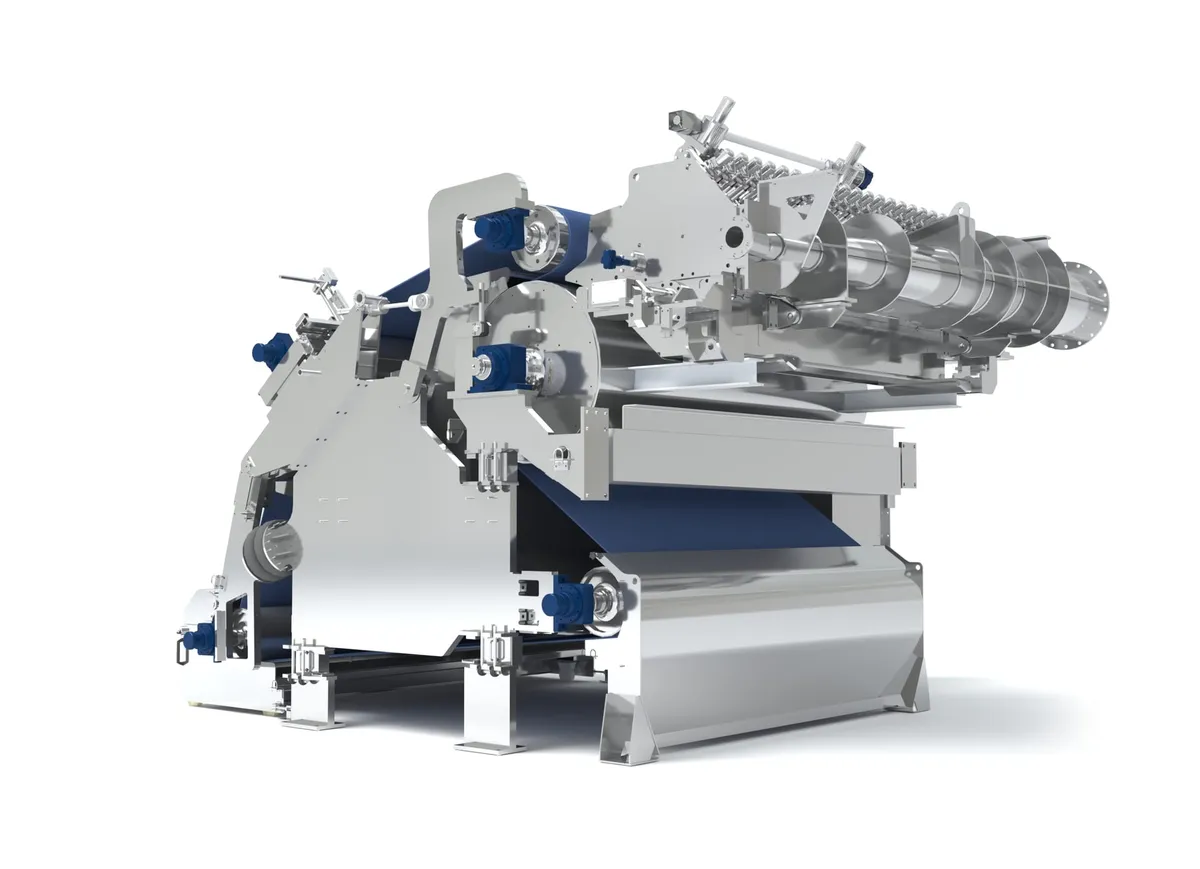
Capacity band snapshot
| Capacity Band | Typical Market | Machine Configuration | Typical Deckle |
|---|---|---|---|
| 5 to 20 TPD | Regional / institutional | Compact tissue line | Up to 2,800 mm |
| 20 to 60 TPD | National branded | Crescent former + Yankee | 2,800 to 3,800 mm |
| 60 to 100+ TPD | Large commercial / export | High-speed crescent former | Up to 4,500 mm |
Tissue Paper Factory Setup Cost by Production Capacity
Factory setup cost scales non-linearly with capacity. Doubling tissue machine output does not double the total project cost, because overheads like land, utilities, and warehousing stay broadly fixed. Capacity is therefore the first decision an investor should make.
5 to 20 TPD: the small tissue mill
This band suits an entrepreneur entering the tissue business for the first time and serving a regional market. The scope typically includes a single crescent former tissue machine, minimal stock preparation (if running on imported virgin pulp bales), a simple converting line for toilet paper rolls or napkins, and a small warehouse. Power demand is modest, site preparation is straightforward, and permits move faster than for larger mills in most jurisdictions.
20 to 60 TPD: the national branded mill
At this band the mill becomes a meaningful player in a country's tissue supply. The scope expands to full stock preparation with pulping, cleaning, screening and refining; a larger tissue machine with Yankee cylinder of 12 to 14 ft diameter; a hot air hood (gas or steam); full converting including jumbo reel rewinders and folding equipment; and a larger warehouse for parent rolls and finished goods. Effluent treatment becomes more substantial. This is the most common band for greenfield tissue projects in India, Nigeria, and Kenya today.
60 to 100+ TPD: the large commercial mill
At 60 TPD and above, the mill moves toward export-grade capacity. Machinery includes a high-speed crescent former, a Yankee up to 4,500 mm width and 16 ft diameter, a premium hood system, a full deinking line if recycled fibre is used, and an automated pope reel. Converting capacity scales up with multiple rewinders and packaging lines. Viking Kait runs a Parason 50 TPD tissue line in the upper end of the previous band; larger builds at 80 TPD and above typically target both domestic and regional export markets.
Project cost at each band is finalised after target grade, raw material, and site conditions are defined. Request a quote from Parason's engineering team for a cost envelope tailored to your capacity.
Toilet Paper Manufacturing Cost
Toilet paper is the largest sub-category within tissue. A toilet paper manufacturing plant shares the same core machinery as any tissue mill: pulping, stock preparation, crescent former, Yankee cylinder, hood, pope reel, and converting. Converting for toilet paper specifically adds jumbo reel rewinders, perforation units, log saws, and wrapping equipment.
What makes toilet paper different
Toilet paper grades typically sit in the 13 to 25 GSM band. Single-ply and two-ply products dominate most markets. Softness, bulk, and dispersibility in water are the three quality targets. Raw material choice directly affects all three: virgin BHK pulp gives the softest hand feel, recycled fibre gives acceptable quality at a lower raw material cost, and bagasse sits in between.
Scale choices for toilet paper
Entry-level toilet paper manufacturers typically start at 5 to 15 TPD, serving a regional distribution network. A 30 to 50 TPD toilet paper mill targets national branded supply. Above 50 TPD, the plant usually combines toilet paper with other tissue grades (kitchen towel, facial tissue, napkin) to balance product mix against market demand.
Cost drivers unique to toilet paper
Wrapping and packaging materials (film, cores, cases) are a larger share of total manufacturing cost for toilet paper than for industrial tissue grades. Logistics cost is high because toilet paper is a low-density, bulky product. Siting the plant near demand centres reduces freight cost materially and often defines plant location decisions.
For a deeper dive into the process side, see the full tissue paper production line guide, which covers the step-by-step tissue paper manufacturing process and how tissue paper is made at industrial scale.
Tissue Paper Manufacturing Cost in India
India has become one of the largest greenfield tissue markets globally. Rising disposable income, urbanisation, hospitality sector growth, and increasing hygiene awareness have driven double-digit tissue demand growth for most of the past decade.
What makes India attractive
- Domestic availability of bagasse, recycled fibre, and imported virgin pulp
- Strong indigenous machinery manufacturers, including Parason based in Chhatrapati Sambhajinagar since 1976
- Skilled operators and a mature paper machinery ecosystem
- Multiple state-level industrial incentive schemes for new paper mills
- Access to regional export markets across Africa, the Middle East, and South Asia
Indian cost structure
Raw material cost in India is competitive for recycled grades and bagasse, higher for imported virgin pulp. Labour cost is lower than in Europe or East Asia. Land cost varies sharply by state. Gas and coal are available in most industrial corridors, though biomass and renewable thermal options are gaining share. GST, import duty on machinery, and state-level concessions all affect landed project cost.
Capacity options for the Indian market
| Capacity Band | Typical Scope for India | Typical Raw Material |
|---|---|---|
| 10 to 20 TPD | Regional mill for institutional tissue and napkins | Imported virgin pulp bales |
| 25 to 50 TPD | National branded toilet paper and kitchen towel | Mix of virgin pulp and bagasse |
| 60 to 100 TPD | Large commercial mill with export share | Bagasse or recycled DIP with virgin top-up |
India-based investors also benefit from the ability to source the complete tissue paper mill machinery line from a single Indian manufacturer, reducing freight, currency, and lead-time risk. Parason supplies tissue paper machines from 5 TPD to 100 TPD with full turnkey project support across India and beyond.
Tissue Paper Business Cost in Nigeria and Africa
Africa is one of the fastest-growing tissue markets globally. Urbanisation, hospitality growth, and hygiene awareness are driving double-digit tissue consumption growth in Nigeria, Kenya, Egypt, South Africa, and Ghana.
Nigeria: large population, growing demand
Nigeria is the single largest tissue market in sub-Saharan Africa. Domestic production does not yet meet demand, so imports fill the gap. A local tissue mill in the 20 to 50 TPD range can capture meaningful import substitution value. Parason commissioned a 300 TPD kraft paper mill for Quantum Papers in Nigeria, demonstrating in-country project execution capability that carries directly into tissue project delivery.
Kenya and East Africa
Kenya has been an active tissue expansion market for the past decade. Bagasse from the sugar industry provides an accessible fibre source. Parason commissioned equipment for Kibos Sugar and Allied in Kenya, showing that local bagasse-to-tissue integration is commercially viable for East African investors.
South Africa, Egypt, and wider Africa
South Africa has a more mature tissue market with existing large players. New entrants typically target niche segments or regional export. Egypt has growing domestic demand and proximity to Middle Eastern and European markets, making it attractive for export-oriented tissue capacity. Ghana and Ivory Coast are emerging smaller markets worth watching for early-mover positioning.
Africa-specific cost considerations
- Higher import duty on some machinery categories; local content incentives in several countries
- Power reliability varies by location; captive power generation is often included in project cost
- Currency volatility and import financing structures affect landed machinery cost
- Logistics cost from port to inland sites can be significant and should be modelled early
Parason supports Nigerian, Kenyan, and other African investors with local project execution, installation supervision, and operator training. Request a quote for a project cost envelope tailored to your country and capacity.
Profit and ROI in Tissue Paper Manufacturing
Tissue paper manufacturing is one of the more attractive segments within the broader paper industry because tissue demand is consumption-driven and relatively decoupled from industrial cycles. Unlike kraft or packaging grades, tissue volumes do not collapse in a downturn.
What makes tissue profitable
- Consumer tissue (toilet paper, facial tissue, kitchen towel, napkins) is a repeat-purchase consumable
- Demand is relatively inelastic; it holds up through recessions in a way packaging volumes do not
- Tissue machines run at high speeds with good uptime, producing strong volume throughput per unit of fixed cost
- Branding and distribution create pricing power that commodity grades do not enjoy
What drives ROI outcomes
Return on investment in a tissue mill depends on:
- Capacity utilisation: commercial utilisation in the first 12 months is the single biggest variable. Mills that stall at 40% utilisation for a year often underperform even well-run competitors at 80%.
- Product mix: premium grades carry higher margin than commodity tissue. A mill that can flex between napkin, kitchen towel, and facial tissue grades protects margin when one category softens.
- Raw material flexibility: mills that can swing between virgin, recycled, and bagasse capture margin in volatile pulp markets.
- Energy efficiency: Yankee steam savings, shoe-press dryness gains, and hood efficiency all compound over the mill's life.
- Distribution reach: mills that own or control distribution capture margin that pure converters pay away.
Typical payback profile
Tissue mill payback is location-specific, product-specific, and capacity-specific. Mills that run at or near nameplate capacity on premium branded grades in urbanising markets have shorter paybacks than commodity tissue mills in saturated markets. Investors should model payback on realistic utilisation ramps, not nameplate capacity from day one.
Parason's engineering team supports feasibility studies that include realistic production ramp, utility consumption, and operating cost envelopes. Contact the team for a project-specific ROI model.
How Raw Material Choice Affects Cost
Raw material is typically 40 to 60% of tissue manufacturing operating cost. Raw material choice also affects which machinery is needed, so the decision has both capital expenditure and operating expenditure implications.
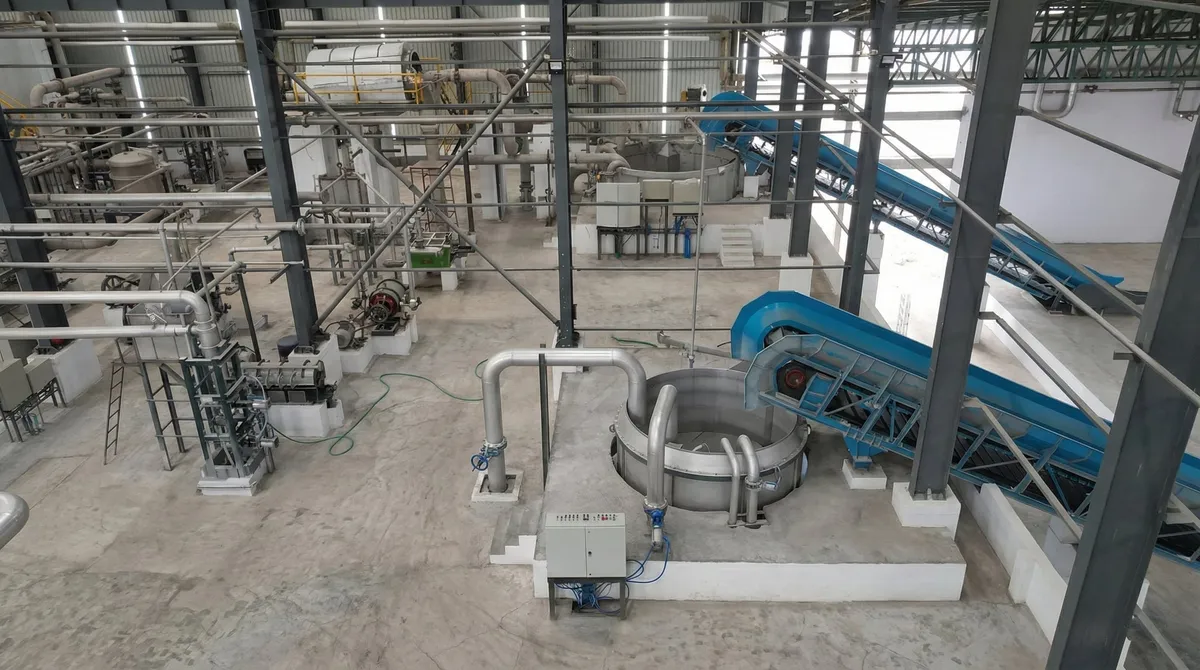
Virgin pulp (bleached hardwood kraft)
Imported BHK bales from Brazil, Indonesia, Chile, or Finland. Produces the softest, brightest tissue. Requires minimal stock preparation (pulper, refiner, screening). Highest raw material cost. Best suited to premium branded tissue and facial grades where softness and brightness justify the fibre premium.
Recycled fibre (office waste, mixed waste)
Requires full stock preparation including pulping, cleaning, screening, refining, and deinking if the target grade is white or bright. Lower raw material cost but higher capex and utility cost per tonne. Best suited to mid-tier tissue where brightness requirements are less strict.
Bagasse
Sugar-cane processing byproduct. Abundant in India, Kenya, Brazil, and other sugar-growing regions. Requires a dedicated bagasse pulping and depithing line. Lower raw material cost than virgin BHK and domestically sourced. Good fit for integrated mills inside sugar cluster regions, where the mill can co-locate with a sugar factory.
Raw material comparison
| Route | Raw Material Cost | Stock Prep Capex | Quality | Best For |
|---|---|---|---|---|
| Virgin BHK pulp | High | Low | Premium | Facial tissue, branded toilet paper |
| Recycled fibre (DIP) | Low | High | Mid-tier | Napkins, mid-tier toilet paper |
| Bagasse | Low in source regions | Medium | Good | Integrated mills in sugar regions |
Many successful tissue mills design their stock preparation line to swing between two or three raw material routes, capturing margin when one fibre source becomes relatively expensive.
Tissue Paper Making Machine Price Factors
The tissue paper making machine itself is typically the single largest line item in total project cost. Machine price is driven by six factors.
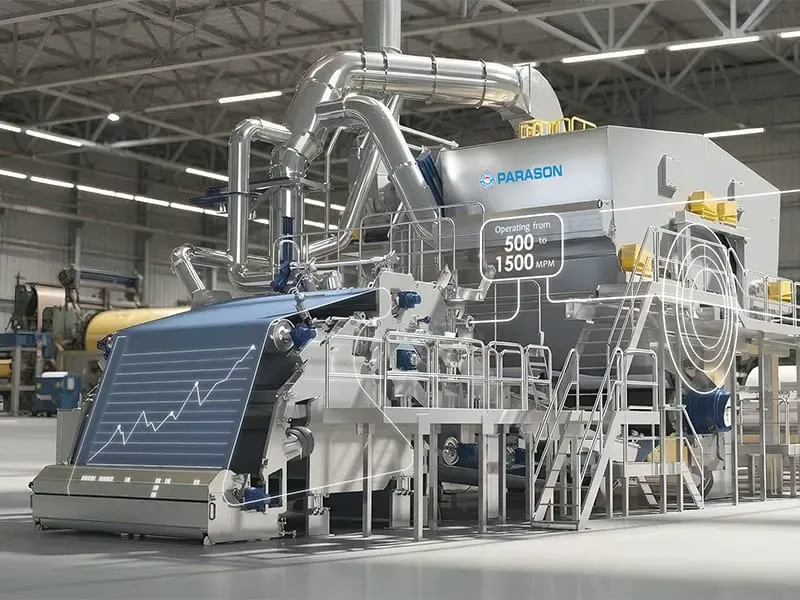
1. Capacity (TPD) and speed (MPM)
A 10 TPD tissue machine running at 800 MPM is a fundamentally different piece of equipment from a 100 TPD machine running at 1,500 MPM. Higher speed requires precision-engineered forming, pressing, and drying components, more robust mechanical structure, and more sophisticated drives.
2. Deckle (width)
Tissue machine deckle widths run from under 2,000 mm for compact machines to 4,500 mm for the largest commercial lines. Wider deckles produce more tissue per unit time but increase machine capex non-linearly.
3. Yankee cylinder specification
The Yankee cylinder is typically the single most expensive component of a tissue machine. Yankee diameter ranges from 12 to 16 ft, and larger cylinders deliver more drying capacity but add cost. Cast iron, steel, and hybrid designs all carry different price points.
4. Hood system (gas vs steam)
A hot air hood recycles exhaust heat and drives tissue moisture to final spec. Gas-fired hoods give faster ramp-up and lower fuel cost in gas-rich regions. Steam-heated hoods are cheaper to install where steam infrastructure is already available on site.
5. Degree of automation
Manual, semi-automatic, and fully automatic pope reels and converting lines sit at different price points. Higher automation reduces operator headcount and improves consistency but adds upfront cost.
6. Scope (core machine vs full line)
A standalone tissue machine is cheaper than a complete line with stock prep, converting, and utilities. Project scope definition should be aligned with existing site infrastructure to avoid double-counting equipment already in place.
Parason's product portfolio covers the full tissue machine range from 5 TPD to 100 TPD with speeds up to 1,500+ MPM, deckles up to 4,500 mm, and a choice of gas or steam hood. Specifications and quote are tailored to the project after capacity, grade, and site conditions are confirmed.
Frequently Asked Questions
How much does it cost to start a tissue paper manufacturing business?
What factors influence tissue paper manufacturing cost?
Is tissue paper manufacturing business profitable?
What is the cost of a tissue paper making machine?
How much does it cost to set up a tissue paper factory in India?
What is the cost of setting up a tissue paper factory in Nigeria?
How much does it cost to make toilet paper?
What raw materials are used for tissue paper manufacturing?
How long does it take to set up a tissue paper manufacturing plant?
What is the minimum capacity for a tissue paper mill to be profitable?
Start Your Tissue Paper Project With Parason
Parason Machinery has been building paper and tissue machinery from Chhatrapati Sambhajinagar, India since 1976. ISO 9001:2015 certified, with over 2,000 installations across 75+ countries, Parason offers a complete single-source solution for tissue projects:
- Tissue paper machines from 5 TPD to 100 TPD
- Crescent former tissue machines at speeds up to 1,500+ MPM
- Yankee cylinders from 12 to 16 ft diameter, widths up to 4,500 mm
- Gas or steam-heated hood systems
- Complete stock preparation for virgin, recycled, and bagasse fibre
- Converting lines for toilet paper, kitchen towel, facial tissue, and napkin grades
- Turnkey project delivery including feasibility, engineering, installation supervision, commissioning, and operator training
- Full spare parts and after-sales support globally
Project references include Viking Kait (50 TPD tissue), Quantum Papers (300 TPD kraft, Nigeria), and Kibos Sugar and Allied (Kenya), alongside 75+ countries of tissue and paper mill installations.
Next steps
- Define target capacity, tissue grade, and raw material route
- Confirm site location and utility availability
- Request a quote from Parason's engineering team
- Review a project-specific feasibility and cost envelope
Sources and References
- Parason Machinery product catalogues: tissue machines, stock preparation, paper machines
- Parason case studies and project references across 75+ countries
- Industry tissue demand outlooks from FAO Forestry Statistics and regional pulp and paper associations