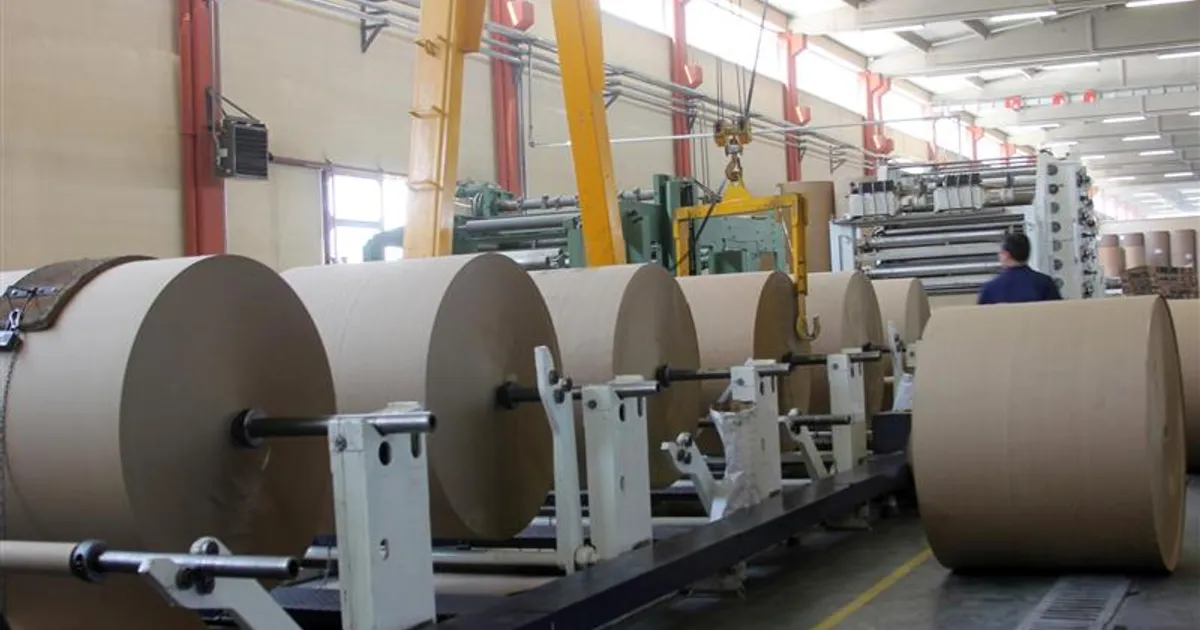
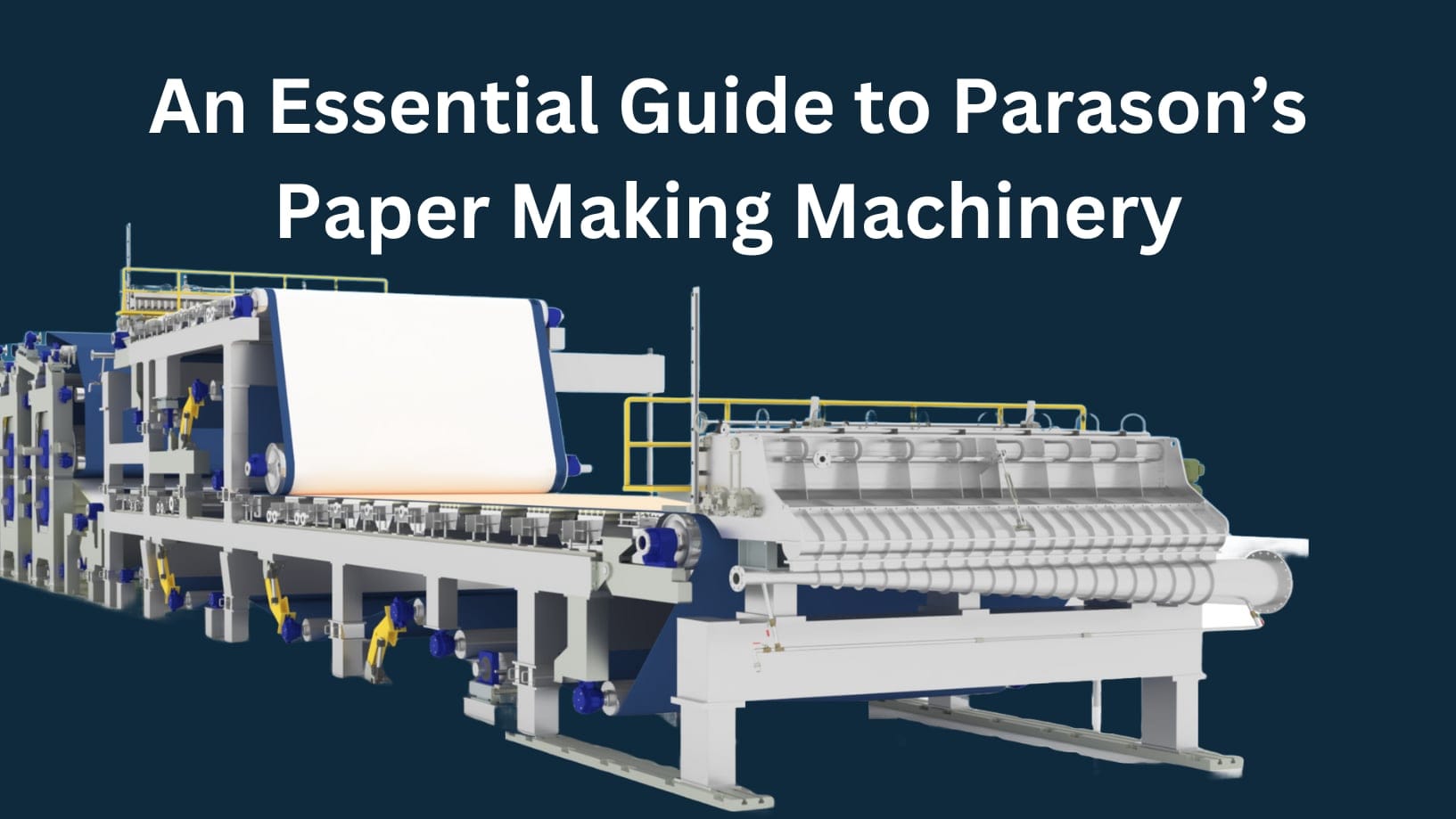
A paper mill is an industrial plant that converts raw fibre — waste paper, wood pulp, or agro-residue like bagasse — into finished paper. A modern paper mill plant integrates pulping, stock preparation, forming, pressing, drying, and reeling into one continuous process to produce kraft, writing and printing, tissue, duplex board, or newsprint grades.
The paper manufacturing business is one of the most stable industrial investments today. India’s domestic paper market stands at approximately 24 million tonnes (IPMA, 2024-25), growing at 6–8% annually. African nations like Nigeria import over 93% of their paper requirements (BusinessDay Nigeria). The global pulp and paper market is valued at USD 394 billion, projected to reach USD 551 billion by 2034 at 3.8% CAGR (Precedence Research, 2025).
For investors evaluating a paper mill plant setup, the opportunity is clear. This guide covers what drives paper mill setup cost, how to start a paper making business step by step, and what paper mill requirements you must address before breaking ground.
It draws on Parason Machinery’s 50+ years of experience setting up turnkey paper mills across 75+ countries and 500+ projects.
What Is a Paper Mill Plant and How Does It Work?
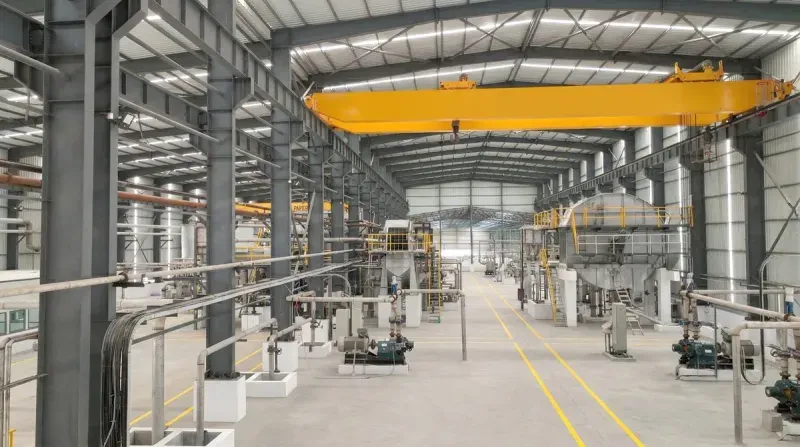
A paper mill plant is a manufacturing facility that converts raw fibre into finished paper products. Anyone starting a paper manufacturing business must understand how these facilities work. Raw materials include waste paper, wood pulp, bagasse, or agricultural residue. The paper manufacturing process follows a systematic sequence from raw material to finished roll.
Paper Manufacturing Process — Raw Material to Finished Paper
Every paper mill factory operates on the same fundamental process:
- Raw Material Preparation — Waste paper bales or wood chips are sorted, cleaned, and fed into the pulping system
- Pulping — Raw material is mixed with water and broken down into fibres using high-consistency pulpers at 14–18% consistency. For equipment pricing details, see our pulp machine cost guide
- Cleaning and Screening — Contaminants (plastics, staples, sand) are removed through pressure screens and centrifugal cleaners
- Refining — Fibres are treated in disc refiners to develop bonding strength and achieve target freeness
- Approach Flow — Refined stock is diluted, cleaned, and delivered to the headbox at precise consistency
- Sheet Formation — The hydraulic headbox distributes stock across the wire section. Water drains and a wet paper sheet forms
- Pressing — The wet sheet passes through press rolls to reach 40–48% dryness
- Drying — Multi-cylinder paper machine dryers evaporate remaining moisture to 5–6% final content
- Finishing — The sheet passes through machine calenders for smoothness, then winds onto a pope reel winder
- Rewinding — The parent roll is slit and rewound into customer sizes for dispatch
The entire process takes approximately 20–30 minutes in a running paper mill factory.
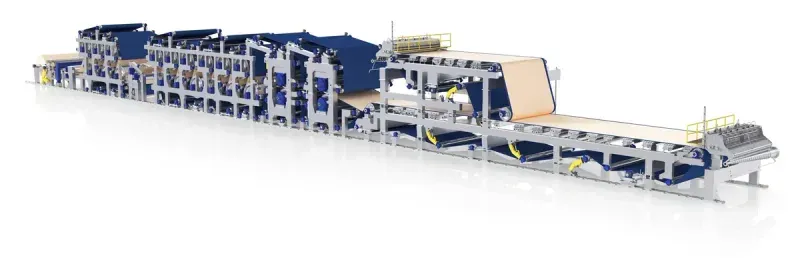
Key Sections of a Paper Mill Factory
| Section | Function | Key Equipment |
|---|---|---|
| Stock Preparation | Converts raw material into usable fibre | Pulper, screens, cleaners, refiners |
| Approach Flow | Delivers clean stock to paper machine | Fan pump, pressure screen, deaerator |
| Wet End | Forms the paper sheet | Headbox, wire section |
| Press Section | Mechanically removes water | Press rolls, shoe press, felts |
| Dryer Section | Thermally dries the sheet | Steam-heated cylinders, Yankee dryer |
| Finishing | Controls surface quality | Calender, pope reel, rewinder |
| Utilities | Supports all operations | Boilers, compressors, water treatment, ETP |
Types of Paper Products You Can Manufacture
The paper making industry produces a wide range of products. Each requires different machinery:
| Paper Grade | Applications | Capacity Range | Raw Material |
|---|---|---|---|
| Kraft / Corrugated | Packaging boxes, cartons | 30–1,200 TPD | Waste paper (OCC), virgin pulp |
| Tissue / Toilet Paper | Facial tissue, toilet rolls, napkins | 5–150 TPD | Virgin pulp, deinked pulp |
| Duplex / Grey Board | Carton packaging, food boxes | 30–300 TPD | Mixed waste paper |
| Writing / Printing | Notebooks, copier paper | 30–500 TPD | Wood pulp, deinked waste paper |
| Newsprint | Newspapers, magazines | Up to 400 TPD | Deinked waste paper |
| Specialty | Food-grade, security, décor | Custom | Varies |
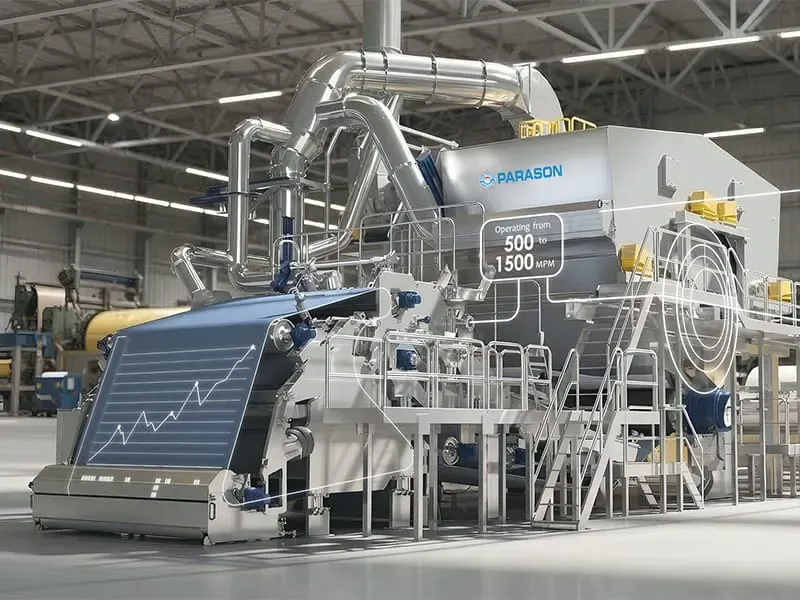
Parason manufactures complete paper machines for all major grades. Operating speeds range from 100 to 1,000 m/min with wire widths from 1,500 to 8,000 mm. Choosing the right paper grade is the first strategic decision in any paper manufacturing business.
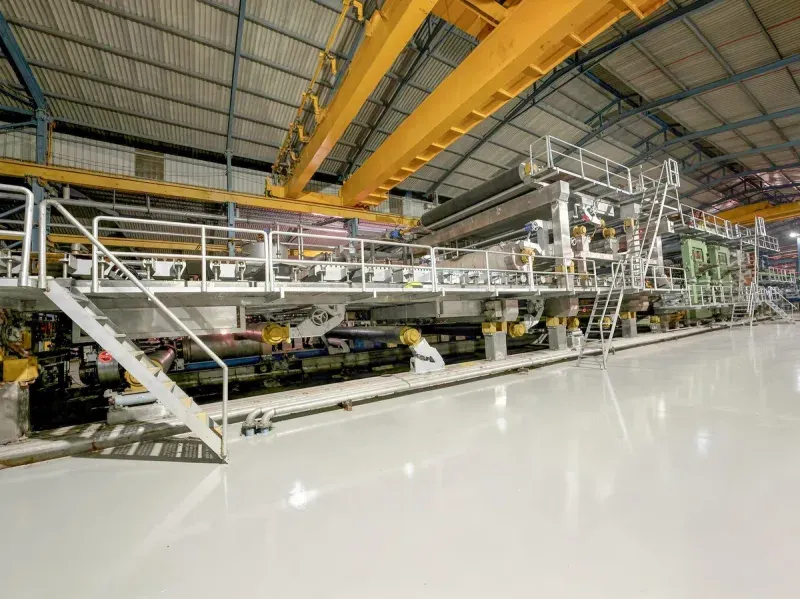
How a Paper Mill Works: Process Overview
A paper mill works by breaking down fibrous raw material, cleaning it, forming it into a continuous web, and drying it into finished paper. The sequence is the same across every paper grade, though the specifications change with the product.
Step 1. Pulping. Waste paper, wood chips, or bagasse is fed into a Hydrapulper where water and mechanical agitation break the raw material into a fibre slurry at 4–18% consistency depending on pulper type.
Step 2. Cleaning and screening. The pulp passes through centricleaners and pressure screens to remove sand, plastics, staples, shives, fibre bundles, and oversized debris.
Step 3. Stock preparation. The cleaned pulp is refined in disc or conical refiners — part of the stock preparation line — to develop fibre bonding, then blended with additives such as sizing, starch, retention aids, and fillers (clay, CaCO₃ for writing and printing grades) to match the target paper.
Step 4. Forming. The prepared stock is distributed across a moving wire through a headbox, where water drains away and a fibre web is formed at deckles up to 10 m wide.
Step 5. Pressing and drying. The wet web passes through the press section (roll press or shoe press) to squeeze out water — modern shoe presses raise sheet dryness from 48% to 54%, cutting steam consumption by 15–20% — then through steam-heated drying cylinders that reduce moisture below 6%.
Step 6. Reeling and finishing. The dry paper is calendered for surface finish, reeled into jumbo rolls on a pope reel, and either slit, sheeted, or dispatched for converting.
A well-engineered paper mill runs this sequence continuously at speeds from 200 up to 1,200 metres per minute depending on grade, machine class, and deckle width.
Is Paper Manufacturing Business Profitable?
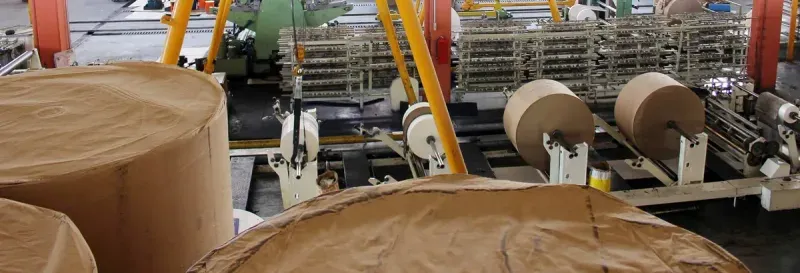
Yes — provided you select the right paper grade and manage operations efficiently. The paper manufacturing business benefits from strong structural demand drivers.
Paper Industry Market Demand and Growth
India is the fastest-growing major paper market globally (Business Standard / IPMA, 2024):
- India: Paper consumption at 24 million tonnes, growing 6–8% annually. Per capita consumption is only 16 kg versus the global average of 57 kg — indicating massive headroom (IPMA). The industry employs over 5 lakh people directly and 15 lakh indirectly
- Nigeria: Imports 93% of paper requirements. Domestic production capacity is only ~265,000 MT/year against demand of ~3 million MT/year
- Bangladesh: Garment accessories and packaging sector worth US$7.48 billion (FY2024-25). Corrugated paper market valued at $1.2 billion
- Southeast Asia: Vietnam and Indonesia are rapidly industrialising with growing paper consumption
- Middle East: Saudi Arabia’s tissue market growing at 4.8% CAGR; UAE at 5.8% CAGR (IMARC Group, 2024)
The global shift from plastic to paper packaging adds further demand. Over 100 countries have enacted single-use plastic bans (Grand View Research, 2024). E-commerce drives demand for 55 billion corrugated packages annually worldwide.
For deeper analysis of India’s paper industry growth trajectory, read our report on the future of the paper industry.
Profit Margins in Paper Manufacturing
Profitability varies by grade, raw material sourcing, and efficiency:
| Factor | Impact on Profitability |
|---|---|
| Paper grade | Tissue and specialty papers command higher margins than commodity kraft |
| Raw material cost | Accounts for 40–55% of production cost. Local sourcing improves margins dramatically |
| Energy efficiency | Power and steam account for 25–30% of costs. Modern equipment reduces this significantly |
| Capacity utilisation | Mills above 85% utilisation achieve substantially better unit economics |
| Market proximity | Local selling eliminates high freight costs on a heavy, low-value product |
The paper manufacturing business is a volume-driven operation. Once a paper mill plant reaches steady-state production, cash flow characteristics are attractive. This is why experienced investors often expand into second and third lines.
Paper Mill Business ROI — When Do You Break Even?
Most well-planned paper mill projects reach breakeven within 24–36 months at 85%+ capacity utilisation. Key variables:
- Speed of ramp-up after commissioning (3–6 months to reach design capacity)
- Raw material pricing stability
- Local paper selling prices and demand consistency
- Equipment efficiency (modern machinery reduces waste and downtime)
- Working capital management
The paper mill business is a long-term, stable investment. Mills that are properly equipped operate profitably for decades. This is what makes the paper manufacturing business one of the most attractive manufacturing investments across Asia and Africa.
Paper Mill Requirements — What You Need Before Starting
Before investing in a paper mill plant, every paper manufacturing business investor needs clarity on several requirements. Understanding the challenges faced by paper manufacturers helps you plan proactively. Skipping any of these paper mill requirements leads to delays or cost overruns.
Land and Location Selection for Your Paper Mill Plant
Location directly affects operational costs. Evaluate:
- Raw material proximity — For waste paper (OCC), locate near major cities. For bagasse, locate near sugar mills. For imported pulp, locate near ports
- Water availability — A paper mill requires 50–150 cubic metres of water per tonne of paper. Confirm year-round access
- Power infrastructure — Paper mills are power-intensive. Evaluate grid stability and captive power options
- Transportation — Proximity to highways or rail for raw material receipt and finished goods dispatch
- Labour — Access to skilled and semi-skilled workers
- Market access — Proximity to your primary market reduces freight costs
Industrial estates (MIDC zones in India) offer ready infrastructure — land, power, water, and road connectivity. Proper site selection is critical for any paper manufacturing business to achieve long-term operational efficiency.
Licences, Permits and Environmental Compliance
Every paper manufacturing business requires regulatory clearances before starting operations. In India:
- Environmental clearance from SPCB under CPCB norms. Your effluent treatment plant (ETP) design is critical
- Consent to Establish (CTE) and Consent to Operate (CTO)
- Factory licence under the Factories Act
- GST registration
- MSME/Udyam registration — enables access to government subsidies and priority lending
- Fire safety NOC
- Land use / zoning approval
For Nigeria, Bangladesh, or UAE — requirements vary but typically include environmental assessments and industrial licences. Parason’s project teams navigate regulations across 75+ countries.
Raw Materials — Waste Paper, Wood Pulp, Bagasse
Your raw material determines stock preparation design and operating costs:
| Raw Material | Suitable Grades | Key Consideration |
|---|---|---|
| Waste Paper (OCC) | Kraft, corrugated, board | Widely available. Contamination varies — cleaning system must handle it |
| Mixed Waste Paper | Lower-grade kraft, grey board | Abundant, low cost. Needs intensive cleaning |
| Virgin Wood Pulp | Writing, printing, tissue | Higher cost but superior quality |
| Bagasse | Writing, printing, packaging | Seasonal — requires storage planning |
| Agricultural Residue | Kraft, packaging | Wheat/rice straw. Silica requires special processing |
For most first-time investors starting a paper manufacturing business, waste paper (OCC) is the most practical choice. Parason’s stock preparation systems achieve 96%+ fibre recovery from waste paper.
Manpower and Labour Requirements
A 50 TPD paper mill typically needs 80–120 people. Key roles: machine operators, stock prep operators, boiler operators, electricians, quality control staff, and a production manager with industry experience.
Parason’s turnkey projects include operator training as part of commissioning.
Utilities — Power, Water and Steam
| Utility | Role | Planning Consideration |
|---|---|---|
| Power | Drives motors, pumps, refiners | Evaluate grid stability. Consider captive power |
| Steam | Dries paper, heats water | Coal, biomass, or gas boilers. Major operating expense |
| Water | Process water, cooling | Secure year-round supply. Install recirculation |
| Compressed Air | Instrumentation, actuators | Size based on plant requirements |
| ETP | Treats wastewater | Mandatory for compliance. Parason supplies complete ETP systems |
Your ETP can also generate revenue — paper mill wastewater can produce renewable fuel through a Bio CNG plant, turning a compliance cost into income.
Paper Mill Setup Cost — What Determines Your Investment
Paper mill setup cost is the most asked question by new paper manufacturing business investors. There is no single answer — the cost of starting a paper manufacturing business depends on multiple interconnected factors. An accurate estimate requires detailed engineering for your specific project.
How Paper Grade Affects Your Investment
Different grades require different machinery configurations:
- Kraft / corrugated mills — Robust stock preparation, fourdrinier wire section, conventional press and dryer. Most cost-efficient setup relative to revenue
- Tissue paper mills — Specialised crescent formers, Yankee dryers (capital-intensive components), and hood systems. Higher investment per TPD but higher margins
- Duplex board mills — Multi-layer forming with multiple headboxes increases complexity
- Writing / printing mills — Superior stock preparation needed, often including deinking systems for recycled fibre
Choose your grade based on market demand — not machine cost alone. Your paper manufacturing business profitability depends heavily on this decision.
How Production Capacity Impacts Project Scale
Paper mill setup cost scales with capacity but not linearly. A 100 TPD mill does not cost twice a 50 TPD mill. Larger mills benefit from economies of scale, better energy efficiency, and lower per-tonne operating costs.
However, larger mills need more land, higher working capital, and bigger teams. For first-time paper manufacturing business investors, starting at 30–100 TPD (kraft) or 10–30 TPD (tissue) and expanding later is practical.
What Goes Into Total Paper Mill Project Cost
Your investment is not just machinery. Total paper mill setup cost includes:
| Component | What It Covers |
|---|---|
| Machinery and equipment | Paper machine, stock preparation, approach flow |
| Boilers and utilities | Steam, power distribution, compressed air, water treatment |
| Civil construction | Factory building, foundations, storage, office |
| Electrical and automation | Motors, drives, DCS/PLC systems |
| Effluent treatment plant | Wastewater treatment for environmental compliance |
| Working capital | Raw material inventory, operations before revenue stabilises (3–6 months) |
| Pre-operative expenses | Engineering, permits, insurance, trial runs |
| Land | Varies dramatically by location |
Many first-time paper manufacturing business investors focus only on machinery and underestimate total paper mill setup cost. A realistic assessment must cover all components.
Kraft Paper Mill Project Cost
Kraft paper mill project cost varies primarily with capacity (TPD) and raw material source. A small-scale kraft paper mill of 30 to 50 TPD using recycled waste paper and basic stock preparation typically falls in a lower investment band than a 150 to 300 TPD bagasse-based kraft mill, which requires additional pulping and chemical recovery infrastructure.
Key cost drivers for a kraft paper mill:
- Raw material route. Recycled waste paper needs only repulping and cleaning. Virgin bagasse or wood pulp needs a full chemical pulping line (digester, washing, bleaching).
- Capacity (TPD). Doubling capacity does not double cost. Larger machines have better cost-per-TPD economics.
- Finished grade. Testliner, fluting, and liner board have simpler machinery needs than sack kraft or MG kraft.
- Utilities. A kraft mill needs higher steam and power load than a recycled-paper mill, affecting captive utility investment.
Parason pulping lines scale from 30 TPD for compact recycled operations up to 1,200+ TPD for large integrated mills, with complete kraft systems delivered across India, Nigeria, Bangladesh, and Latin America. Exact project cost is quoted after finalising capacity, grade, and location. Request a quote with your target specifications.
Paper Mill Cost in India by Capacity
Paper mill cost in India depends on capacity, paper grade, and how much of the utilities and civil work are built from scratch. Broad capacity bands used in Indian project planning:
| Capacity Band | Typical Application | Cost Drivers |
|---|---|---|
| 10 to 30 TPD (mini paper mill) | Small kraft, newsprint de-inking, agro-based | Compact layout, limited automation, lower civil footprint |
| 30 to 100 TPD | Regional kraft, duplex board, specialty | Multi-stage stock prep, mid-size paper machine, ETP |
| 100 to 300 TPD | Integrated kraft/duplex, virgin-fibre mills | Full chemical recovery, high-speed machine, captive power |
| 300+ TPD | Large-scale writing/printing, packaging | Multi-ply forming, large fibre handling, automated controls |
For a mini paper mill, Indian investors typically start with recycled waste paper to reduce raw material capex and match MSME subsidy eligibility. Larger mills require environmental clearance (CTE/CTO, plus EIA for mills above 300 TPD), land of 10+ acres, and power allocation of 2 to 6 MW depending on capacity.
Parason offers turnkey project engineering for every capacity band, including layout, equipment selection, and commissioning.
Mini Paper Mill Project Cost (Entry-Level Investment)
A mini paper mill typically refers to a 5 to 30 TPD plant producing kraft paper, newsprint, or low-grade packaging paper from recycled waste paper. It is the most common entry point for first-time investors because:
- Lower capex: compact machinery, smaller footprint, MSME-eligible
- Recycled-only feedstock: no chemical pulping or recovery boiler required
- Simpler environmental compliance than virgin-fibre mills
- Faster commissioning, typically 12 to 18 months from order
Mini paper mill setup cost depends on target capacity and grade. Small kraft paper lines can start at modest machinery investment when paired with existing brownfield infrastructure and phased automation. Parason supplies mini paper mill machinery packages scalable from 5 TPD upward, with small paper making machine options covered below.
Paper mill setup cost depends on your paper grade, capacity, location, raw material, automation level, and utilities. Every paper manufacturing business project is unique. For a detailed estimate, contact Parason’s engineering team — with 500+ projects, they provide accurate project assessments based on real data.
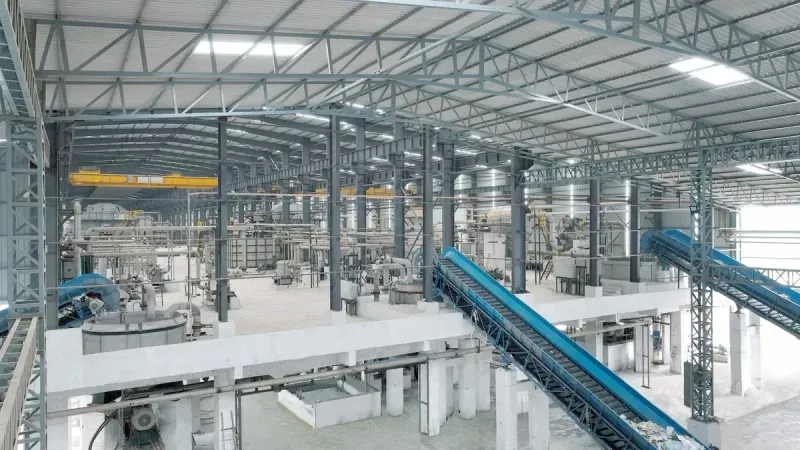
How to Start a Paper Manufacturing Business — Step by Step
Setting up a paper mill plant takes 12–24 months from planning to first production. Here is the proven step-by-step process for launching your paper manufacturing business successfully.
Step 1 — Select Your Paper Grade
Answer these questions first:
- What paper has the highest demand in your target market?
- What raw materials are locally available?
- What is the domestic production vs import ratio?
- What grades do existing manufacturers produce?
- What grades offer the best margins?
For emerging markets (Nigeria, Bangladesh, Vietnam, East Africa), kraft paper is the safest first grade. Demand is massive, waste paper is available, and the process is proven. Tissue paper is an excellent second choice for higher margins.
Step 2 — Prepare Your Paper Mill Business Plan
A solid paper mill business plan includes:
- Market analysis — demand, supply gap, pricing, growth projections
- Technical configuration — capacity (TPD), grade, raw material plan
- Financial projections — capex, opex, revenue, breakeven, IRR
- Funding plan — equity, debt, government subsidies
- Timeline — milestones from land acquisition to production
Parason’s project team assists investors with technical inputs for business plans and DPR preparation.
Step 3 — Choose the Right Location
Apply the location criteria above — raw material proximity, water, power, transport, and market access. Visit potential sites before committing.
Step 4 — Select a Paper Machine Manufacturer
This is the most consequential decision in your paper manufacturing business. Evaluate suppliers on:
- Complete range — Can they supply stock preparation through finishing from a single source?
- Engineering — Do they provide P&IDs, mass balance, plant layouts, civil drawings?
- Track record — How many mills have they commissioned? Can you visit a reference installation?
- After-sales — Is their service team accessible when equipment breaks?
- Spares — Are spare parts manufactured in-house and readily available?
- Training — Will they train your operators on the actual equipment?
Parason checks all these boxes. 50+ years, 500+ projects, 75+ countries, ISO 9001:2015, and a dedicated after-sales team. You can visit running Parason mills and speak with owners directly.
Step 5 — Engineering, Plant Layout and Design
Once you select your machinery partner:
- Equipment sizing based on capacity, grade, and raw material
- Conceptual plant layout optimising material flow and maintenance access
- Mass balance calculating water, fibre, and chemical requirements
- P&ID documentation for complete process control
- 3D plant layout for piping, structural steel, and civil foundations
This engineering work determines how efficiently your paper mill plant operates for its lifetime.
Step 6 — Civil Work, Installation and Commissioning
- Civil construction — Foundations, building structure. Typically 4–8 months
- Equipment delivery — Lead time depends on project scope and capacity
- Mechanical installation — Equipment placement, alignment, piping, electrical
- Commissioning — Systematic testing of each section before integration
Step 7 — Trial Run, Training and Production Start
- Water trial — Running the machine with water only to test mechanical systems
- Stock trial — First sheet of paper. Quality parameters are tuned iteratively
- Operator training — Parason trains your team on the actual machinery
- Ramp-up — Gradually increasing speed over 2–4 weeks to reach design capacity
- Handover — Once guaranteed parameters are met consistently
Total timeline from order to first production: 14–22 months depending on capacity. A well-planned paper manufacturing business reaches design capacity within the first year of operations.
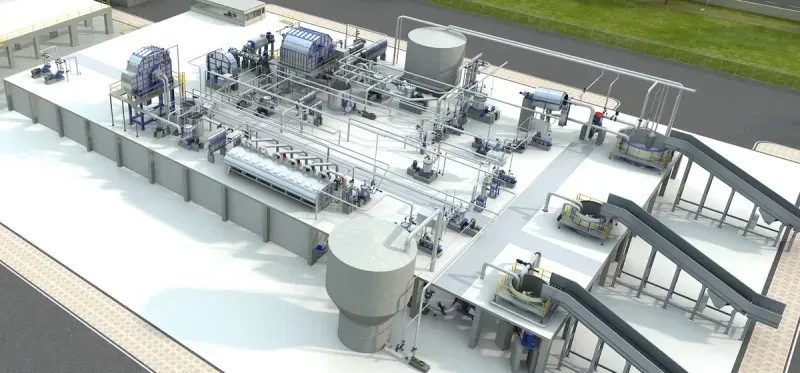
Paper Mill Plant Layout and Engineering
The plant layout determines efficiency, safety, and expandability for your paper manufacturing business throughout its entire operational life.
Stock Preparation System Design
Your stock preparation system is sized based on target capacity (TPD), paper grade, and raw material type. For waste paper mills, the typical sequence: pulper → coarse screening → HD cleaning → fine screening → refining → thickening.
Parason’s systems achieve 96%+ fibre recovery — maximum yield from your raw material.
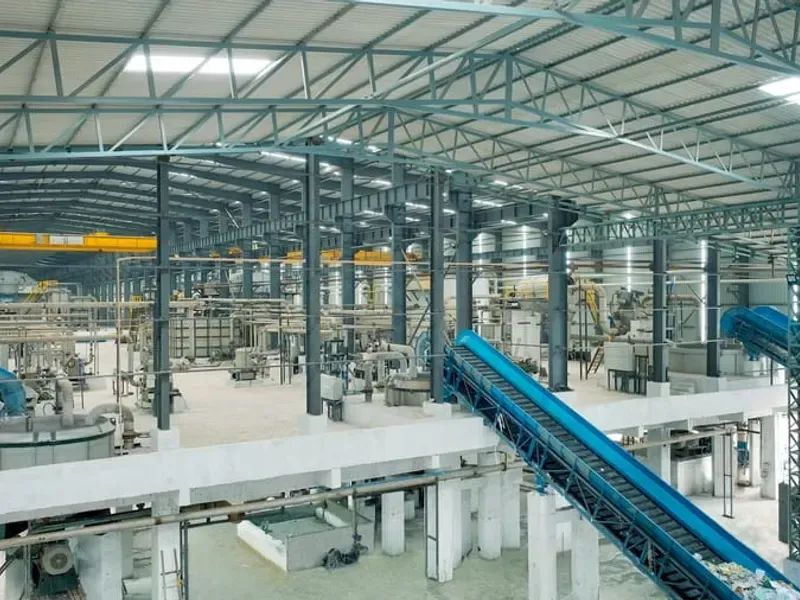
Plant Layout Principles
A well-designed paper mill plant layout ensures:
- Logical material flow — raw material in, finished product out, no backtracking
- Maintenance access — clearance for routine service and major overhauls
- Safety compliance — fire exits, emergency access, electrical zones
- Future expansion — space for a second machine or capacity increase
- Utility proximity — boiler house, water treatment, ETP positioned efficiently
Mass Balance and Process Engineering
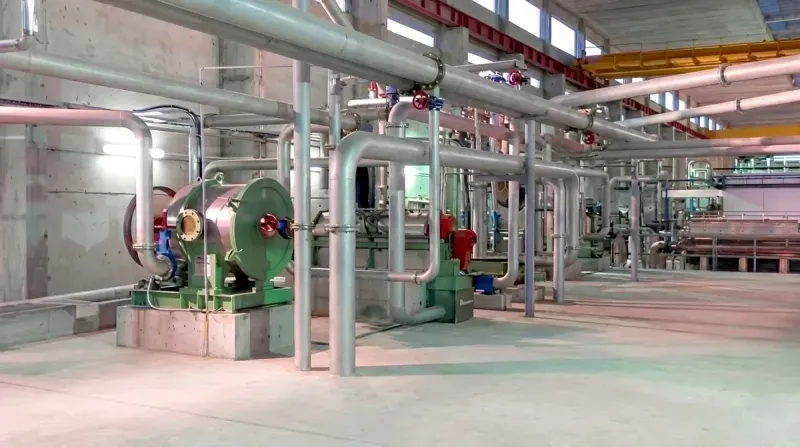
The mass balance calculates exact water, fibre, and chemical quantities at every process point. It determines pump sizes, pipe diameters, and utility requirements. P&ID diagrams document every pipe, valve, and control loop — the primary reference for installation and maintenance.
Parason delivers complete 3D layouts and civil foundation plans for precise construction.
Paper Making Machinery and Equipment
Understanding machinery components helps you evaluate proposals for your paper manufacturing business. Parason manufactures complete paper making machine lines along with stock preparation equipment in-house. For a complete paper mill equipment guide covering every category with verified specifications, see our dedicated equipment reference.
Stock Preparation Equipment
| Equipment | Function | Parason Specification |
|---|---|---|
| HC Pulper | Breaks raw material into fibres | Hicon Pulper — 96%+ defibering at 14–18% consistency |
| Drum Pulper | Gentle pulping for contaminated waste paper | Sharp Edge Drum Pulper — 15–25 kWh/t energy |
| Pressure Screen | Removes oversized contaminants | Fine Screen VSL — multivane aerofoil rotor |
| HD Cleaner | Centrifugal removal of heavy contaminants | HD Cleaner — ceramic and steel variants |
| Disc Refiner | Develops fibre bonding strength | Twin Disc Refiner — precise gap control |
Paper Machine Sections
| Section | Function | Options |
|---|---|---|
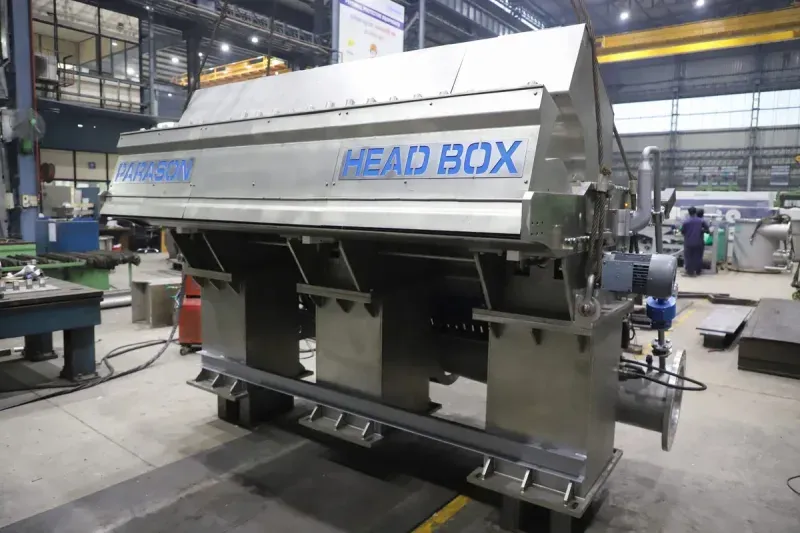
| Headbox | Distributes stock uniformly | Hydraulic (±0.2% uniformity), air cushion, multi-layer |
| Wire Section | Forms paper sheet through drainage | Fourdrinier, twin wire, gap former |
| Press Section | Removes water mechanically | Roll press, shoe press (Maxi Press) |
| Dryer Section | Evaporates moisture with steam | Multi-cylinder (kraft), Yankee (tissue) |
| Calender | Controls thickness and smoothness | Machine calender, soft nip |
| Pope Reel | Winds finished paper | Auto spool change |
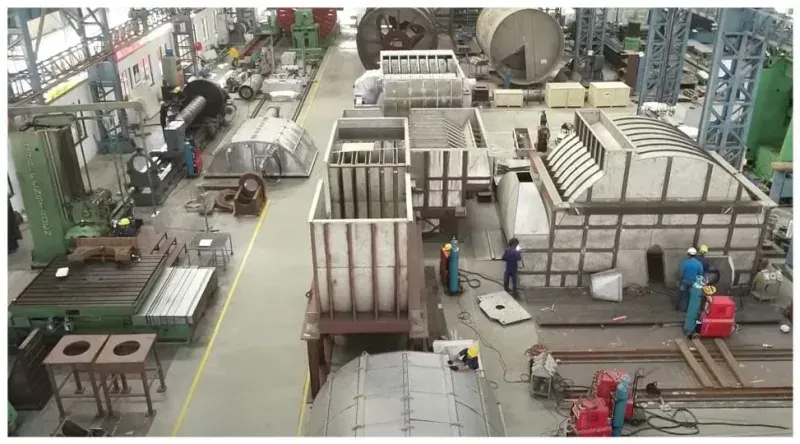
The complete paper machine is manufactured in-house across Parason’s 10 units. Single-source accountability.
Tissue Paper Machine
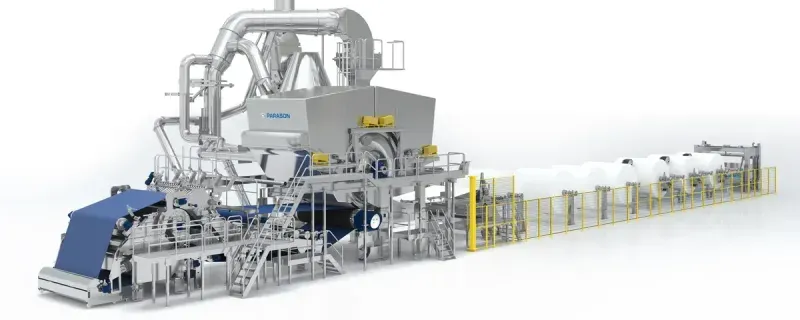
Tissue manufacturing requires specialised equipment:
- Crescent former — twin-wire forming for softness and bulk
- Yankee dryer — 1.8m–4.8m diameter single-pass drying
- Hood system — high-velocity hot air for energy efficiency
- Creping doctor — creates tissue texture and softness
Parason manufactures a complete range of tissue paper machines covering 5–150 TPD capacity.
Small Paper Making Machine — Entry Level
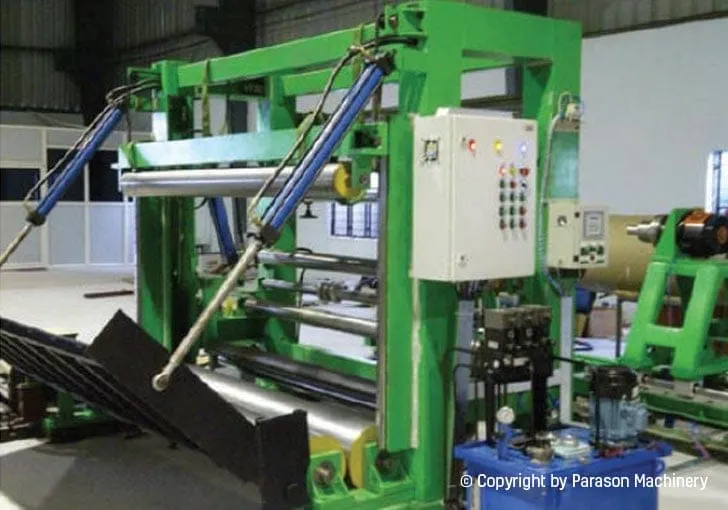
For entrepreneurs starting a paper making business with limited capital, small machines (10–30 TPD) offer a viable entry point. They require less land, fewer utilities, and can be expanded later. Learn more about mini paper mill machines.
Paper Machine Price — Key Cost Factors
Paper machine price depends on capacity, grade, wire width, speed, automation level, and stock preparation complexity. Deinking systems for writing paper add significant cost versus simple OCC-based stock prep.
Indian manufacturers like Parason offer machinery at competitive pricing compared to European suppliers — with complete engineering documentation and after-sales support. This makes Indian-manufactured equipment a strong option for paper mill business investors worldwide.
Paper Product Business Ideas — Which Grade to Choose?
Selecting the right grade is the most important decision in your paper manufacturing business.
Kraft and Corrugated Paper
Kraft is the workhorse of packaging. E-commerce drives demand for 55 billion corrugated packages annually worldwide. The corrugated packaging market is valued at USD 325 billion, growing at 4.36% CAGR (Precedence Research, 2025).
For first-time paper manufacturing business investors, kraft is the most proven starting grade. Parason’s kraft paper mill machinery handles 30–1,200 TPD.
Tissue and Toilet Paper
The tissue paper business offers higher margins but needs more capital per TPD. The global tissue market is valued at USD 91 billion, growing at 5–7% CAGR (Fortune Business Insights). Demand is growing rapidly in India, Middle East, and Africa.
For more on profit in tissue paper manufacturing, along with capacity bands and ROI drivers, see our cost and investment guide.
Duplex and Grey Board
Used in pharmaceutical, food, and FMCG packaging. Multi-layer forming requires more complex equipment. Stable, growing market.
Writing and Printing Paper
Requires superior fibre quality and often deinking for recycled raw material. Good option for markets with strong education and office sectors.
Paper Bags, Paper Plates, and Moulded Fibre
With plastic bans across 100+ countries, demand for paper alternatives has surged:
- Paper plates and paper cups — growing from food service demand
- Moulded fibre from sugarcane bagasse — egg cartons, protective packaging, disposable tableware
These can be added to an existing paper manufacturing business as value-addition or set up independently using moulded fibre machinery.
How to Choose the Right Paper Machine Manufacturer
Your machinery partner is a long-term relationship — 15–20+ years through spares, service, and expansion. Choosing the right manufacturer is what separates a successful paper manufacturing business from a struggling one. For a detailed evaluation framework, see our guide on choosing a paper mill machinery manufacturer.
Evaluation Checklist
Before placing an order for your paper manufacturing business:
- Complete production line from a single source?
- Full engineering documentation (P&IDs, mass balance, layouts, civil drawings)?
- How many similar mills commissioned at your target capacity?
- Can you visit a running reference installation?
- Lead time from order to delivery?
- Dedicated after-sales service team?
- In-house spare parts manufacturing?
- Operator training on actual equipment?
- ISO certification?
Indian vs Chinese vs European Machinery
| Factor | Indian (Parason) | Chinese | European |
|---|---|---|---|
| Price | Competitive | Lowest upfront | Premium |
| Engineering docs | Complete | Often incomplete | Comprehensive |
| After-sales | Dedicated team | Limited | Excellent but expensive |
| Spares | In-house, fast delivery | Slow, quality varies | Available but costly |
| ISO certification | Yes (9001:2015) | Varies | Yes |
| Capacity range | 5–1,200 TPD | 5–300 TPD | 200–5,000 TPD |
| References | 500+ projects | Often unverifiable | Extensive |
| Lead time | As per project scope | 4–8 months | 12–24 months |
Total cost of ownership — including reliability, downtime, spares — is where Indian suppliers offer the strongest value for your paper manufacturing business investment.
Why Turnkey Is Safer for New Investors
For first-time paper manufacturing business investors, a turnkey paper mill project is the safest approach:
- Single accountability — one supplier for engineering, equipment, installation, commissioning
- Equipment compatibility guaranteed
- Proven methodology — Parason follows: Concept → Design → Manufacturing → Installation → Commissioning
- Training included
- Fixed scope and timeline
Parason has delivered turnkey paper mills across 75+ countries — from 10 TPD tissue to 500 TPD kraft.
Paper Manufacturing Business Plan — Key Elements
A strong paper mill business plan is essential for funding and execution of any paper manufacturing business. Here are the key elements your plan must cover.
Revenue Model and Projections
Include: production capacity, revenue based on local prices, operating cost model (raw material, energy, labour), capex, cash flow projections, breakeven analysis, IRR, and payback period.
Funding Options
- Term loans — Banks fund 60–70% against equipment and land collateral
- MSME/Udyam — Priority lending, interest subvention (India)
- State subsidies — Capital subsidies, power concessions, stamp duty exemptions
- DFI — Bank of Industry (Nigeria), BIDA (Bangladesh)
- Equity — Promoter contribution typically 25–40%
Parason provides technical inputs — equipment specs, production parameters — for your paper manufacturing business financial model and DPR.
Paper Mill Projects — Real Case Studies
Real-world projects demonstrate what a successful paper manufacturing business looks like in practice. Here are paper mill plants delivered by Parason across different countries and paper grades.
150 TPD Kraft Paper Mill — Algeria
Complete turnkey delivery. Engineering, manufacturing, installation, commissioning, and operator training — all from Parason as single source.
300 TPD Paper Mill — Nigeria (Quantum Papers)
Complete production line plus operator training. Built local manufacturing capacity in a market that imports 93% of paper requirements.
500 TPD Duplex Board — Ambani Paper LLP, Gujarat
Complete stock preparation line for India’s high-capacity duplex board production.
More References
Parason’s case studies page features 20+ paper manufacturing business projects across India, Nigeria, Algeria, Turkey, Finland, Brazil, and Egypt.
Frequently Asked Questions About Paper Mill Plant
What is a paper mill plant?
How much does it cost to start a paper manufacturing business?
Is paper mill business profitable in India?
What are the basic requirements to set up a paper mill?
How long does it take to set up a paper mill?
What raw materials are needed?
Which paper grade is most profitable?
How to get a licence in India?
What is the ROI of a paper mill?
Kraft vs tissue paper mill?
How does a paper mill work?
Can I start small with limited capital?
Government subsidies in India?
Is paper industry growing?
Risks of starting a paper mill?
Start Your Paper Mill Plant With Parason
Parason Machinery has been manufacturing paper mill equipment for over 50 years. With 500+ projects across 75+ countries, ISO 9001:2015 certification, and an engineering team led by industry veterans — Parason is the partner of choice for paper manufacturing business investors worldwide.
- Complete product range — stock preparation, paper machines, tissue machines — all from a single source
- Turnkey capability — feasibility study to first tonne of production
- Global track record — 500+ projects including India, Nigeria, Bangladesh, Vietnam, UAE, Brazil, Algeria, Turkey
- Competitive pricing — quality engineering at Indian manufacturing costs
- After-sales — dedicated service team, genuine spares, ongoing technical support
Request a Project Estimate | Visit Running Mills | Explore Products
Sources and References
- Indian Paper Manufacturers Association (IPMA) — ipmaindia.org
- India Brand Equity Foundation (IBEF) — ibef.org
- IMARC Group — imarcgroup.com
- Precedence Research — precedenceresearch.com
- Grand View Research — grandviewresearch.com
- Fortune Business Insights — fortunebusinessinsights.com
- Business Standard / IPMA Report — business-standard.com