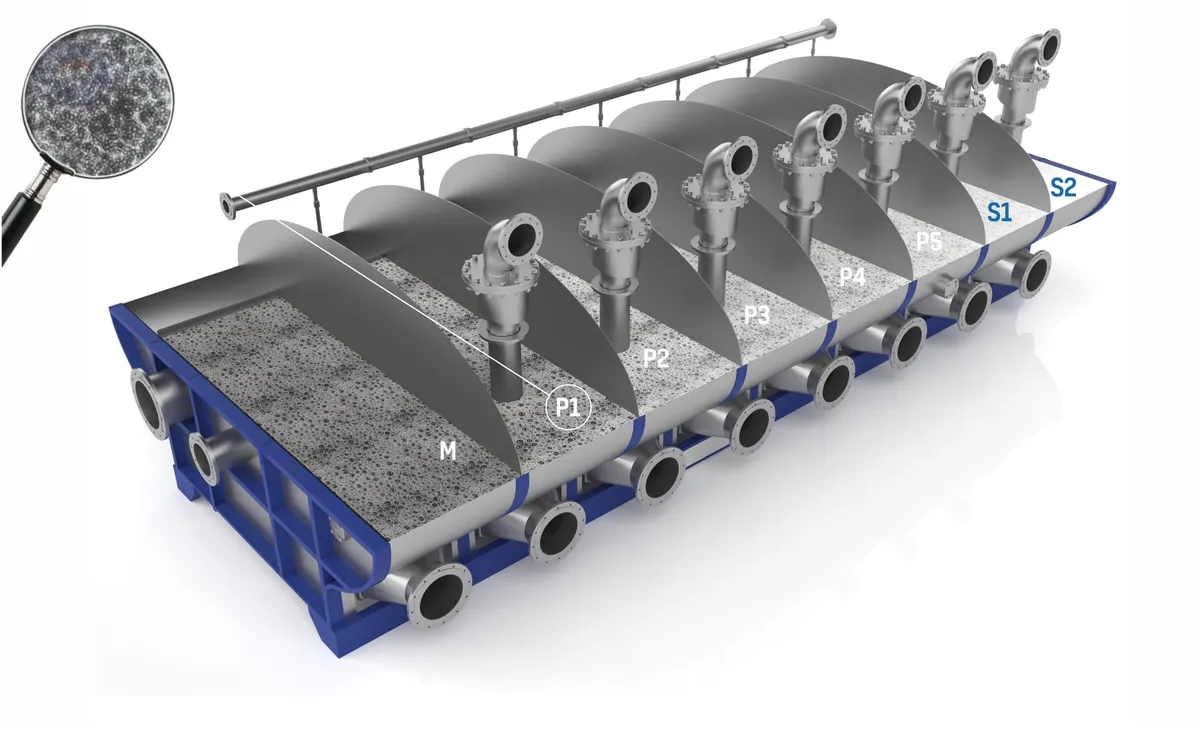
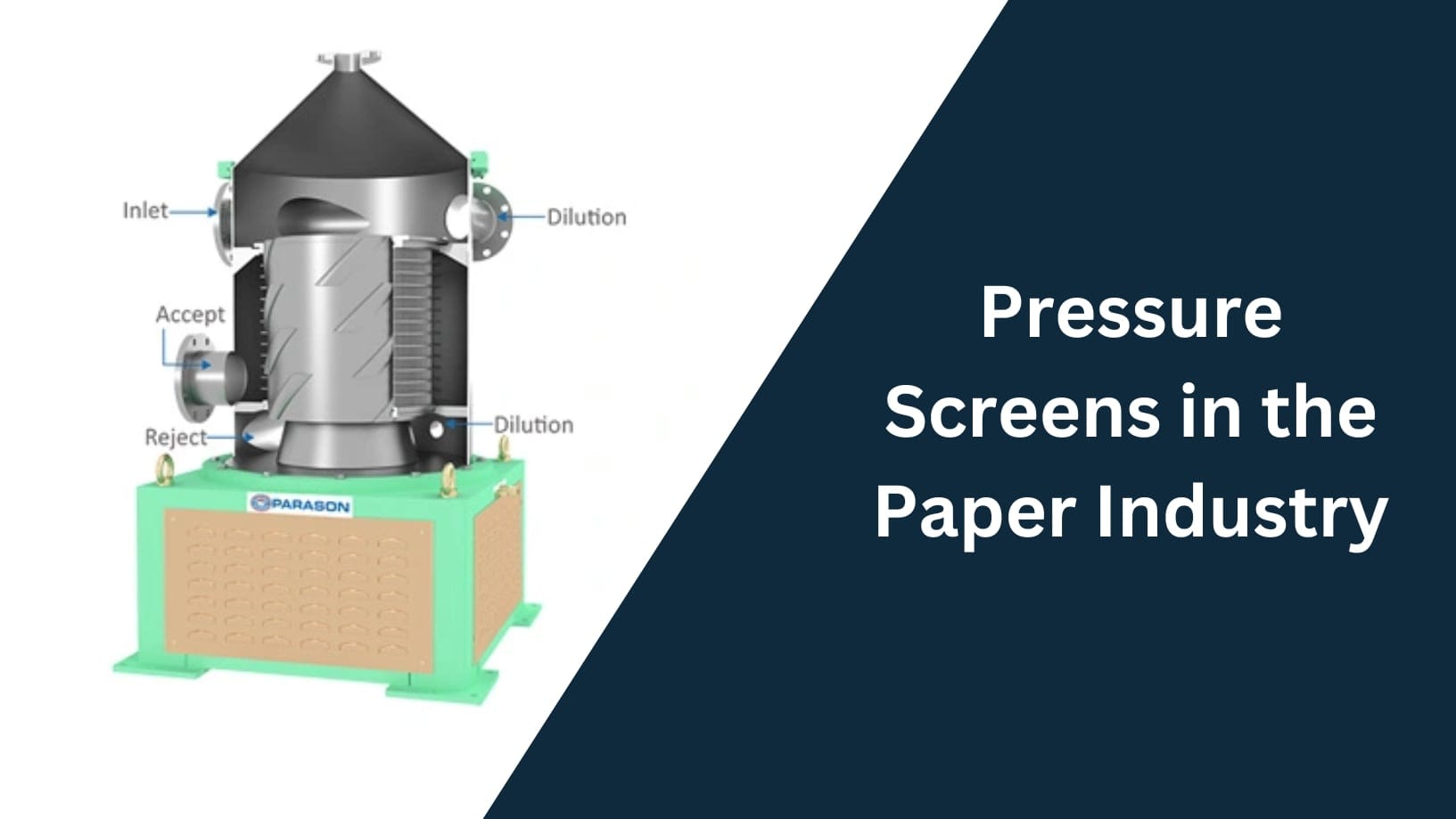
A vibrating screen in a paper mill removes coarse rejects (plastics, staples, sand, and bark) from pulp after the pulper stage and before fine screening begins. Without this coarse screening step, these mid-size contaminants reach the pressure screen, accelerating basket wear and disrupting pulp quality.
This guide covers where the vibrating screen fits in stock preparation, what it removes, how Parason's PSV series is specified, and how to size one for your mill.
What Is a Vibrating Screen in a Paper Mill?
In paper mill stock preparation, a vibrating screen is a coarse reject separation machine. It uses a vibrating mesh or perforated plate to separate unwanted materials from the pulp suspension based on particle size. Pulp accepts pass through the screen openings while coarse rejects are carried forward and discharged separately.
The vibrating screen handles coarser rejects at an earlier stage in the process, operating at relatively higher consistency than the pressure screen. It is the coarse screening stage, positioned after the pulper and high-density cleaner and before fine screening begins. Skipping this stage pushes coarse contaminant removal responsibility onto equipment that is not designed for it.
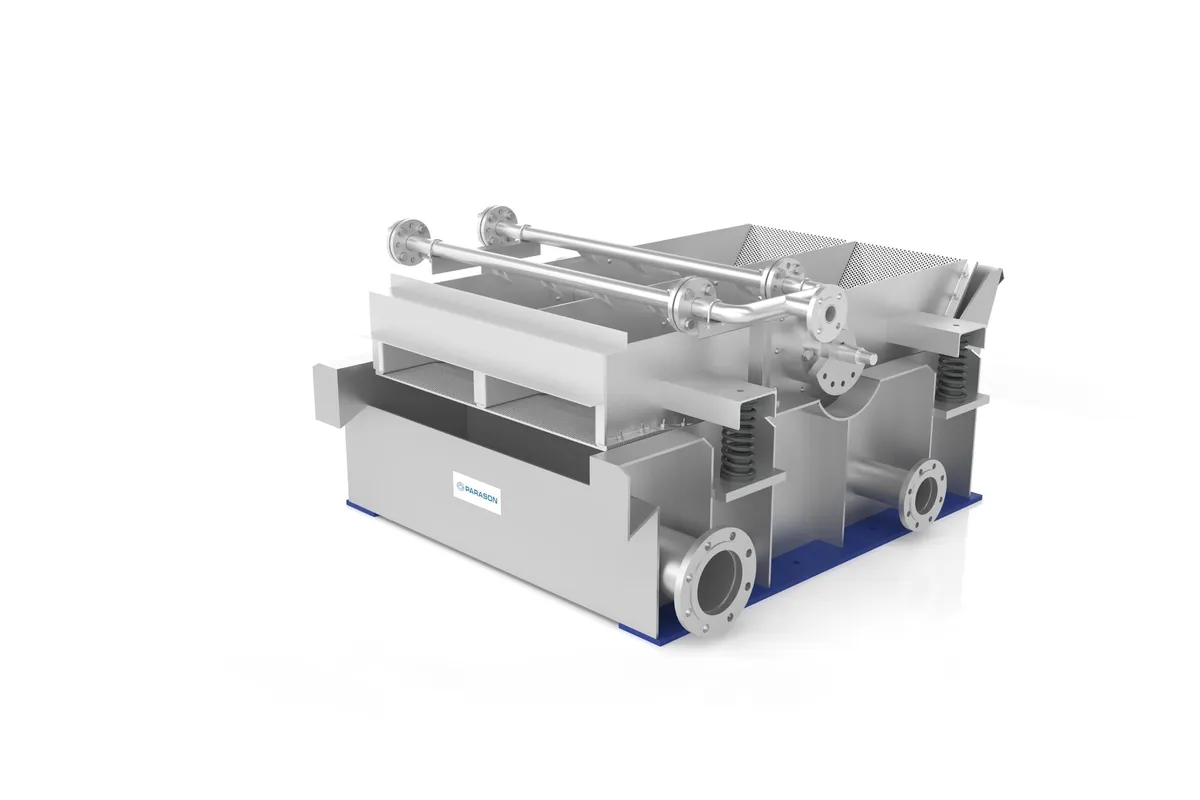
Parason manufactures the Vibrating Screen PSV series, specifically engineered for pulp and paper mill reject separation. The open frame design allows visual inspection during operation, which matters on a busy mill floor where maintenance windows are short and downtime is costly.
Where Does a Vibrating Screen Sit in Stock Preparation?
Stock preparation follows a specific sequence for a reason. Each machine handles a different reject type and a different particle size range. Getting the sequence right protects downstream equipment and reduces operating costs over the life of the plant.
A typical recycled fibre (OCC or mixed waste) stock preparation system follows this flow:
| Stage | Machine | What It Removes |
|---|---|---|
| 1. Pulping | HC Pulper / Drum Pulper | Gross rejects: ropes, wires, large plastics |
| 2. Coarse cleaning | HD Cleaner | Heavy materials: stones, metal, grit, sand |
| 3. Coarse screening | Vibrating Screen (PSV) | Mid-size rejects: plastic films, staples, bark, wet-strength rejects |
| 4. Fine screening | Pressure Screen | Fine contaminants: ink particles, small plastics, fibre bundles |
| 5. Fine cleaning | LC Cleaner | Residual light and heavy fine rejects |
| 6. Refining | Disc / Conical Refiner | Fibre development and strength building |
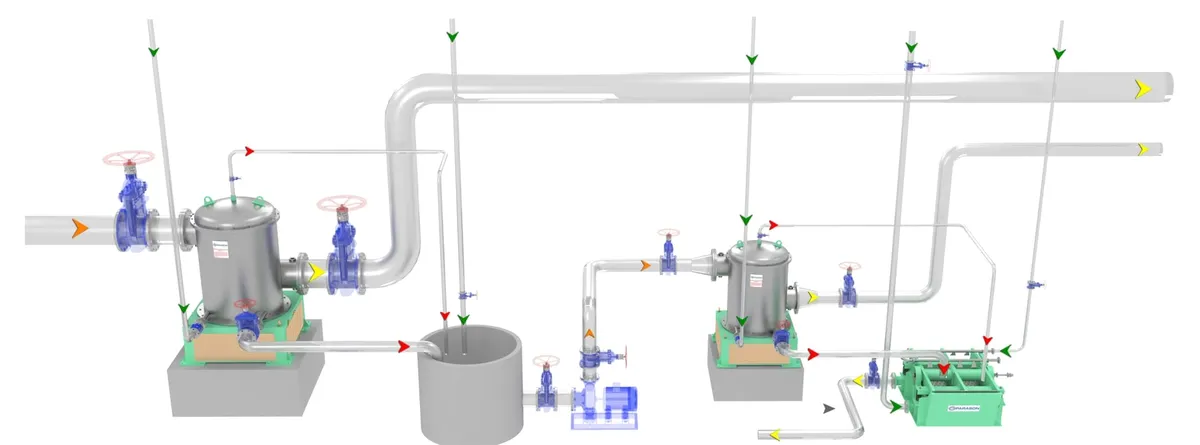
The vibrating screen sits at Stage 3, after gross and heavy rejects have been removed and before fine screening. This positioning is deliberate. Coarse plastics, staples, and bark fragments that escape the HD cleaner will blind pressure screen baskets and cause unplanned shutdowns. The vibrating screen intercepts these contaminants before they reach downstream equipment.
Parason has engineered stock preparation systems across 2,000+ installations in 75+ countries. In every OCC or mixed waste line, the vibrating screen is a standard inclusion at Stage 3. Mills that omit it on recycled fibre lines face increased pressure screen maintenance requirements. The six-stage stock preparation sequence follows standard process design practice as documented by TAPPI, the global authority on pulp and paper manufacturing standards.
What Rejects Does a Vibrating Screen Remove in a Paper Mill?
The reject profile depends on your raw material. OCC (Old Corrugated Containers) and mixed waste paper carry significantly higher contaminant loads than sorted office waste or mechanical pulp.
For OCC processing lines, the vibrating screen typically handles:
- Plastic films and polyethylene bags
- Staples and binding wire from cardboard bales
- Wet-strength paper that did not defibrate in the pulper
- Bark fragments in mills using agricultural residue or wood-containing furnish
- Lightweight foam and expanded polystyrene fragments
For mixed waste paper lines, add textile fragments, foil-laminated packaging, and heavy fines that would blind a pressure screen basket in a short operating period. Rising OCC contamination levels across Indian recycling streams make proper coarse screening design increasingly critical for new mill projects.
The Parason PSV Vibrating Screen is designed to handle diverse sorts of rejects in a single pass. The open design lets operators see what is coming off the screen during operation, giving a direct read on raw material quality that experienced mill managers use to identify supplier problems early.
Vibrating Screen vs Trommel Screen vs Pressure Screen
These three machines are not alternatives. They work in sequence, each handling a specific reject type the others are not designed for. The confusion arises because all three are called "screens," but their operating principles, positions in the line, and reject types are completely different.
| Machine | Stage in Line | Reject Type Handled | Primary Application |
|---|---|---|---|
| Trommel Screen | Pre- or post-pulping, coarse | Large bulk contaminants | Ropes, wire, bulk plastics, large debris |
| Vibrating Screen (PSV) | Post-pulping, coarse screening | Mid-size contaminants | Plastic films, staples, bark, wet-strength rejects |
| Pressure Screen | Fine screening | Fine contaminants | Ink, small plastics, fibre bundles, fine rejects |
A common question from new paper mill investors: can I go straight from the HD cleaner to the pressure screen and skip the vibrating screen? The answer depends on raw material. For clean, sorted office waste or virgin pulp, this may work. For OCC or mixed waste (the raw material for most packaging paper and board mills in developing markets), skipping the vibrating screen means your pressure screen handles a reject load it was not designed for.
Parason PSV Vibrating Screen: Specifications
Parason's PSV Vibrating Screen series is engineered specifically for paper and pulp mill coarse screening applications. The PSV designation refers to the flat, inclined vibrating screen design with an open frame for maintenance access and operational inspection.
Key design characteristics of the PSV series:
- Screening of diverse sorts of rejects in a single pass
- Open design for visual inspection during operation, without stopping the machine
- Cleaner pulp output delivered to downstream fine screening equipment
- Reliable mechanical operation for continuous 24/7 production environments
- Low power consumption relative to screening capacity
For mills above 8 TPD, the PSV series is integrated into a complete Parason stock preparation system with multiple units configured to match the reject load and raw material type. Parason's engineering team sizes the full system, not individual machines, based on your production targets and furnish composition. Browse the full Parason Vibrating Screen product page or contact the engineering team for system-level sizing.
Sizing a Vibrating Screen for Your Paper Mill
Three factors determine which PSV model is right for your mill: production capacity in TPD, raw material type, and whether the vibrating screen operates as a standalone unit or as part of a complete stock preparation system.
For small mills processing 2–8 TPD (including community-scale recycling operations, niche packaging producers, and specialty paper units), the PSV-0.5 and PSV-01 provide appropriately sized solutions. These mill scales are common in India, Nigeria, Bangladesh, and Indonesia, where small-scale recycled fibre operations supply local packaging demand.
For medium and large mills above 10 TPD, the vibrating screen is part of a broader stock preparation system design. Parason has engineered complete stock preparation lines for mills ranging from 10 TPD to 500+ TPD across 75+ countries. In these configurations, the vibrating screen model, quantity, and screen plate specification are determined as part of the complete system, not selected in isolation.
The key sizing input is not just TPD but reject load. A 50 TPD mill processing clean sorted office waste carries a significantly different reject profile from a 50 TPD mill processing baled OCC from a mixed industrial source. The OCC mill requires greater coarse screening capacity at this stage. Contact Parason's engineering team for mill-specific sizing.
Vibrating Screen in OCC Paper Mill Lines
OCC (Old Corrugated Container) is the primary raw material for new packaging paper and board mills being established across developing markets such as India, Nigeria, Bangladesh, Vietnam, and Africa. It is abundant, increasingly well-collected in urban centres, and cost-competitive with virgin fibre in most of these markets. According to the Indian Paper Manufacturers Association (IPMA), recycled fibre accounts for a significant and growing proportion of total fibre consumption in India's paper industry, driven by OCC availability and cost advantages over virgin pulp.
OCC bales carry a high contaminant load compared to sorted office waste or virgin pulp. The stock preparation line for OCC must be designed to handle this load at each stage, and the vibrating screen at Stage 3 is a standard requirement in any properly designed OCC line.
Parason's complete OCC stock preparation systems include the full sequence from pulping through cleaning, screening, and refining, with the PSV Vibrating Screen integrated at the coarse screening stage. This system approach ensures each machine receives the pulp quality it was designed to process, which protects equipment life and maintains consistent output to the kraft paper machine.
Maintenance of Vibrating Screens in Paper Mills
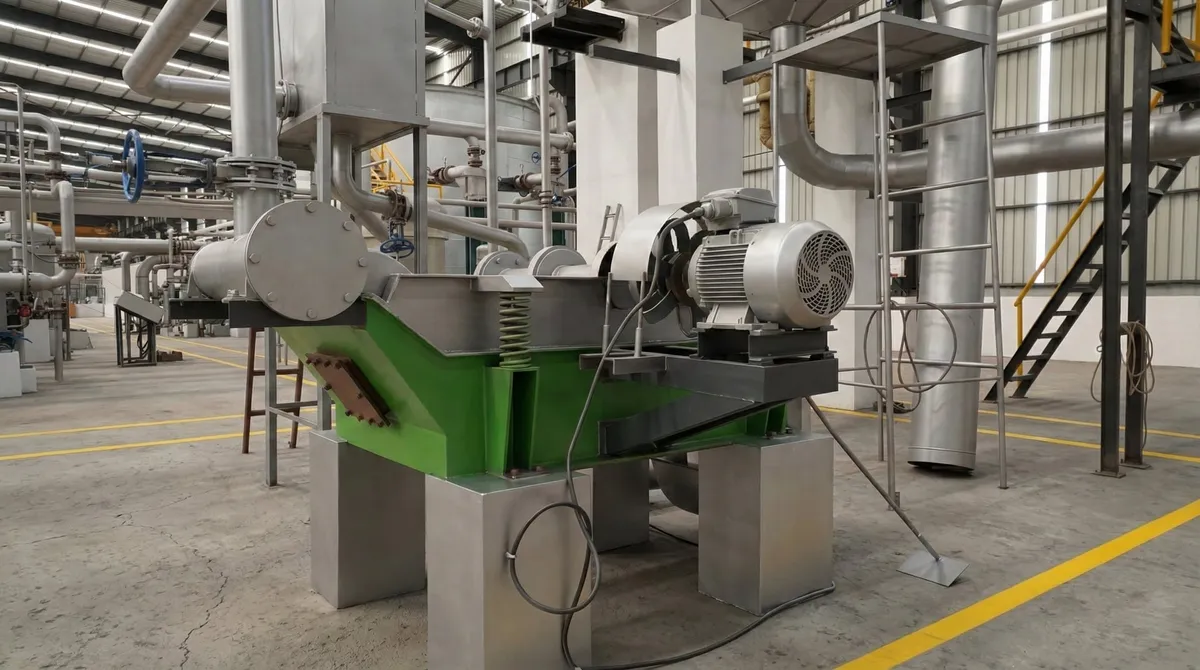
The open frame design of the Parason PSV is a maintenance engineering decision. Paper mills run 24 hours a day and any task that requires a machine shutdown costs production time. Visual inspection through an open frame during operation lets your maintenance team assess screen plate condition, reject quality, and discharge clearance without stopping the machine.
Routine maintenance for a vibrating screen in paper mill operations:
- Screen plate or mesh inspection and replacement (frequency depends on reject type and daily tonnage)
- Vibration mechanism lubrication per manufacturer schedule
- Drive motor condition check
- Reject discharge clearance inspection
- Frame and mounting bolt check (vibration creates mechanical fatigue over time)
Parason supplies complete spare parts for the PSV series, including screen plates and vibration mechanisms. For mills in India, spare parts are available from Parason's manufacturing facility in Akola, Maharashtra. For international installations across Nigeria, Bangladesh, Indonesia, Vietnam, and other markets, Parason supplies spare parts with standard lead times through its global service network. Contact the Parason service team to arrange a spares audit or stock-up schedule for your PSV unit.